

Assess the Visible Colour
The current colour, pigment history, skin type, previous procedures and treatment goal are reviewed.
Pulsar Laser Studio · Patient guide
A clear, honest guide to eyebrow tattoo removal, microblading, powder and ombré brows, eyeliner, lip blush, cosmetic pigment colour changes, patch testing, treatment sessions, risks and aftercare.
Jump to a section
Cosmetic tattooing explained
Permanent makeup is a form of cosmetic tattooing. Pigment is implanted into the skin to create or enhance eyebrows, eyeliner or lip colour.
Although it is often described as semi-permanent, pigment can remain for years, change colour, blur, migrate or become unsuitable as facial features and preferences change.
Removal is not a simple one-colour process because cosmetic pigments may contain blends of black, red, orange, yellow, white and other components.
“Semi-permanent” does not mean easy to remove. Technique, pigment chemistry, depth, repeated top-ups and colour correction all influence the removal pathway.
Different techniques, different removal journeys
Fine manual hairstrokes can vary in depth, density, pigment colour and existing scar tissue.
Read the microblading guide →Machine shading may contain denser pigment, soft borders and hidden warm components.
Read the powder-brow guide →Lighter fronts and denser tails may fade at different rates and need separate reassessment.
Read the ombré-brow guide →Hairstrokes and shading may contain different pigment density and depth within the same brow.
Read the combination-brow guide →Traditional, faded or blocky tattoos may have deep pigment, colour correction and existing texture.
Read the old-brow guide →Multiple refresh treatments can create mixed colours, layers, techniques and hidden corrector pigment.
Read the topped-up-brow guide →Selected tails, fronts, arches, migration or pigment outside a future shape may be treatable.
Read the partial-removal guide →Understand immediate reactions, healing stages, colour changes and fully healed outcomes.
View the results guide →The removal process
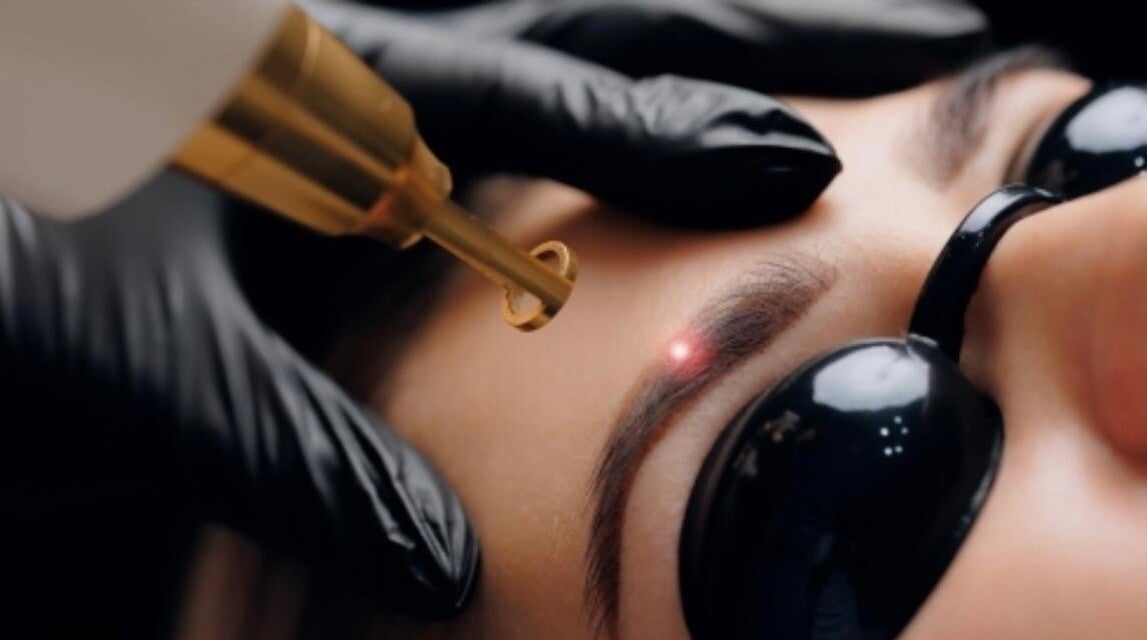
A suitable wavelength delivers a very short pulse of energy into responsive pigment. Larger particles are fragmented into smaller pieces, which the body gradually processes over time.
The current colour, pigment history, skin type, previous procedures and treatment goal are reviewed.
Different colours absorb different wavelengths. One wavelength cannot reliably treat every cosmetic pigment.
Fading develops over several weeks and additional colour components may become visible.
Before treatment begins
Two cosmetic tattoos that look similar can respond differently because pigment brands, colour correctors, depth, age and previous treatments vary.
A patch test is informative, not a guarantee. Different sections of the same cosmetic tattoo can contain different colours, depth and scar tissue.
Why eyebrows can change colour
Natural-looking brow pigments are often blended. When laser reduces one component more effectively than another, the remaining colour becomes easier to see. This is commonly described as colour unmasking.
| Visible stage | What may be happening | Possible next step |
|---|---|---|
| Dark brown or black | A darker component dominates before treatment. | A suitable dark-pigment wavelength may be considered. |
| Red or pink | The dark component has reduced, revealing warm pigment. | A different wavelength may be considered after healing. |
| Orange | Red and yellow components may remain together. | Further treatment depends on colour, skin type and response. |
| Yellow | A resistant yellow component may be the final visible pigment. | Laser benefit may become limited and treatment may stop. |
| Grey or black darkening | White, beige or flesh-toned pigment may have changed after laser exposure. | Pause and reassess the fully healed patch. |
The most difficult cosmetic pigments
Yellow often absorbs available tattoo-removal wavelengths poorly and may remain after darker or red components reduce.
White and pale ingredients can resist treatment and may darken rather than becoming lighter.
Camouflage pigment can contain white, beige, red or yellow components and may respond unpredictably.
Some pale cosmetic pigments can change to grey, blue-grey or black. A cautious patch test is particularly important.
Treatment numbers
There is no honest fixed number. Some brows respond quickly, while others need a staged course as different pigment components appear.
Dark, red, orange, yellow, white and corrected colours respond differently.
Repeated top-ups and corrections can create several layers at different depths.
Microblading, machine shading and older deep tattoos may fade differently.
Full removal, partial fading or preparation for a future correction can require different endpoints.
Treatment close to the eye
Selected eyeliner tattoos may be suitable for laser removal, but treatment beside the eye requires a specialist safety pathway.
At Pulsar, treatment on the eyelid is only performed with correctly fitted internal metal ocular shields. External goggles alone are not used as the sole protection when laser is delivered directly to the eyelid.
Eyeliner colour, migration, position, eye history, skin condition and shield suitability all affect whether treatment can proceed.

The proximity of the eye changes the safety requirements. Treatment should only proceed after dedicated consultation, eye-history screening and appropriate internal protection.
Permanent lip pigment
Lip blush may contain red, pink, orange, brown, white or flesh-toned components. Suitability depends on the visible colour, underlying pigment mixture, skin tone, treatment history, cold-sore history, lip condition and patch-test response.
Warm pigments may respond differently from pale, corrected or mixed lip colours.
White or flesh-toned ingredients can darken after laser exposure and require cautious testing.
Complete removal may not be possible and treatment may stop when further laser is unlikely to help safely.
Technology explained honestly
Nanosecond and picosecond describe pulse duration. A shorter pulse does not automatically make every cosmetic tattoo removable.
Wavelength, delivered energy, spot size, beam quality, pigment chemistry, skin type, technique and healing intervals all contribute to the result.
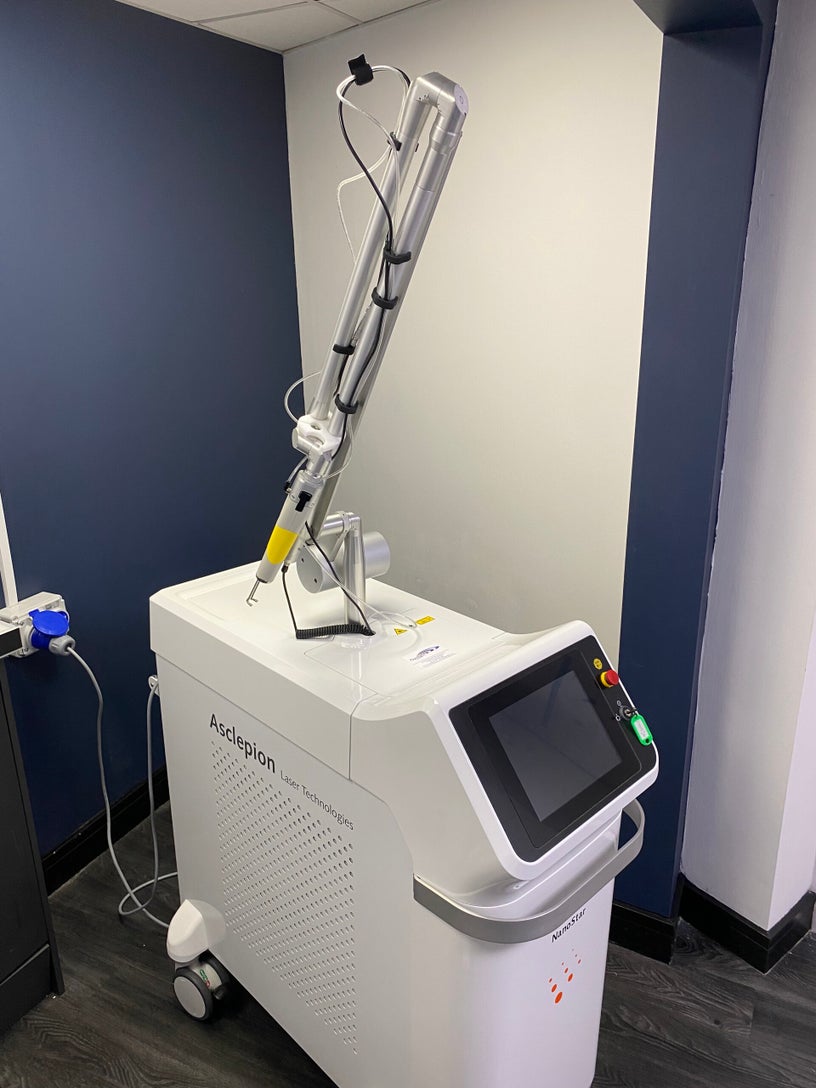
Pulsar uses the German-engineered Asclepion NanoStar Y active Q-switched nanosecond laser at its Chorley clinic. We do not market it as a picosecond laser.
Balanced information
Supporting recovery
Do not judge the final colour immediately. Swelling, frosting and pigment oxidation can temporarily change how the area appears.
Your treatment pathway
Provide makeup-free photographs in natural light or book a consultation.
We assess colour, technique, layering, skin, previous removal, medical information and your goal.
A small area is tested for lightening, colour unmasking, darkening and skin response.
The immediate appearance is not the final result. The patch must settle before treatment decisions are made.
The agreed area is treated with settings appropriate to the visible pigment and skin.
The next wavelength or pathway is chosen from the fully healed result.
Treatment ends when the goal is reached or further laser is no longer safe or useful.
Current permanent makeup removal pricing
| Treatment | Price | Important information |
|---|---|---|
| Eyebrow permanent makeup removal | £120 per session | Consultation and patch testing are required before full treatment. |
| Partial eyebrow fading | Quoted after assessment | For selected tails, fronts, arches or migrated pigment. |
| Eyeliner tattoo removal | Individual quotation | Requires specialist assessment and internal ocular protection. |
| Lip blush assessment | Individual quotation | Suitability depends on colour, pigment mixture, skin tone and patch response. |
| Complex or previously treated PMU | Individual quotation | May include layered pigment, colour correction, scarring or previous removal. |
Published supporting guides
Use the focused guides below for detailed answers about specific pigment colours, techniques, risks and treatment areas.
Pigment fragmentation, wavelengths, staged colour removal and realistic outcomes.
Read guide →Why mixed cosmetic pigment can reveal warmer colours during removal.
Read guide →Why yellow is difficult to target and when laser may need to stop.
Read guide →Why white, beige and flesh-toned pigment can resist treatment or darken.
Read guide →How colour, depth, density, technique and top-ups affect treatment length.
Read guide →Temporary whitening, singeing, shedding, regrowth and recognised risks.
Read guide →Selective treatment of tails, fronts, arches and migrated pigment.
Read guide →How hairstroke depth, colour, repeated treatments and scarring affect removal.
Read guide →Dense machine shading, hidden warm colours and staged treatment.
Read guide →Why lighter fronts and denser tails may respond differently.
Read guide →How hairstrokes and shading can contain different layers and depths.
Read guide →Traditional pigment, depth, correction layers and existing texture.
Read guide →Mixed colours, repeated layers and hidden corrector pigment.
Read guide →Immediate reactions, healing stages, colour changes and realistic results.
Read guide →Internal eye shields, specialist screening, risks and aftercare.
Read guide →Pigment colour, darkening risk, healing and realistic endpoints.
Read guide →Frequently asked questions
No. Some clear very well, while others leave resistant yellow, pale, grey or shadow pigment. Complete removal cannot be guaranteed.
The darker component may have reduced first, revealing red or pink pigment that was already in the colour mixture.
Yellow is often difficult to target and may absorb available wavelengths poorly. Further laser is not always appropriate.
Some pale pigments can undergo a colour change after laser exposure and appear grey, blue-grey or black.
The number varies with colour, depth, layering, top-ups, correction pigment, skin response and your final goal.
Temporary hair lightening or shedding can occur. Permanent reduction is a recognised risk.
Selected eyeliner may be suitable with internal metal ocular shields and specialist eye-area protocols.
Selected lip blush may be assessed, but pigment colour, pale ingredients, skin tone, darkening risk and patch response all affect suitability.
Yes. Scarring is a recognised risk, especially where skin has been repeatedly tattooed, scarred, overtreated or disturbed during healing.
No. Pulse duration is only one factor. Wavelength, energy, beam quality, pigment chemistry, skin type and technique also matter.
No. Different sections may contain different pigment mixtures, depths and scar tissue.
Pulsar does not perform laser tattoo removal during pregnancy.
The Asclepion NanoStar Y active Q-switched nanosecond laser is located at Pulsar’s Chorley clinic.
Start with an individual assessment
Send clear, makeup-free photographs in natural light or book a consultation so we can assess the colour, technique, layering, skin condition and safest removal pathway.
Sources and further reading
This guide provides general information and does not replace an individual consultation, patch test, eye assessment or medical advice. Further reading: U.S. FDA — Tattoo Removal: Options and Results; U.S. FDA — Tattoos and Permanent Makeup Fact Sheet; Laser Removal of Eyeliner and Eyebrow Tattoos: Experiences and Learnings; Lasers for Eyebrow Microblading and Cosmetic Tattoo Pigment: A Review; North Bristol NHS Trust — Tattoo Laser Treatment.