

No Universal Number
Two brows that look similar can contain very different pigment mixtures, depths and treatment histories.
Pulsar Laser Studio · Eyebrow removal guide
There is no honest fixed number for every client. This guide explains what affects treatment length, why brows may change colour during removal and when a safe endpoint may be reached before complete clearance.
Jump to a section
The honest answer
Most eyebrow tattoo removal requires a course rather than a one-off treatment. The exact number cannot be predicted reliably from a photograph or the first appointment alone.
Some lightly implanted brows show significant fading after only a few sessions. Others take much longer because they contain dense shading, repeated top-ups, colour correction, several pigment layers or resistant red, yellow, white or grey components.
The course may also change direction as the brow changes colour. A dark brown brow can become red, orange or yellow, and each new visible stage may require reassessment.
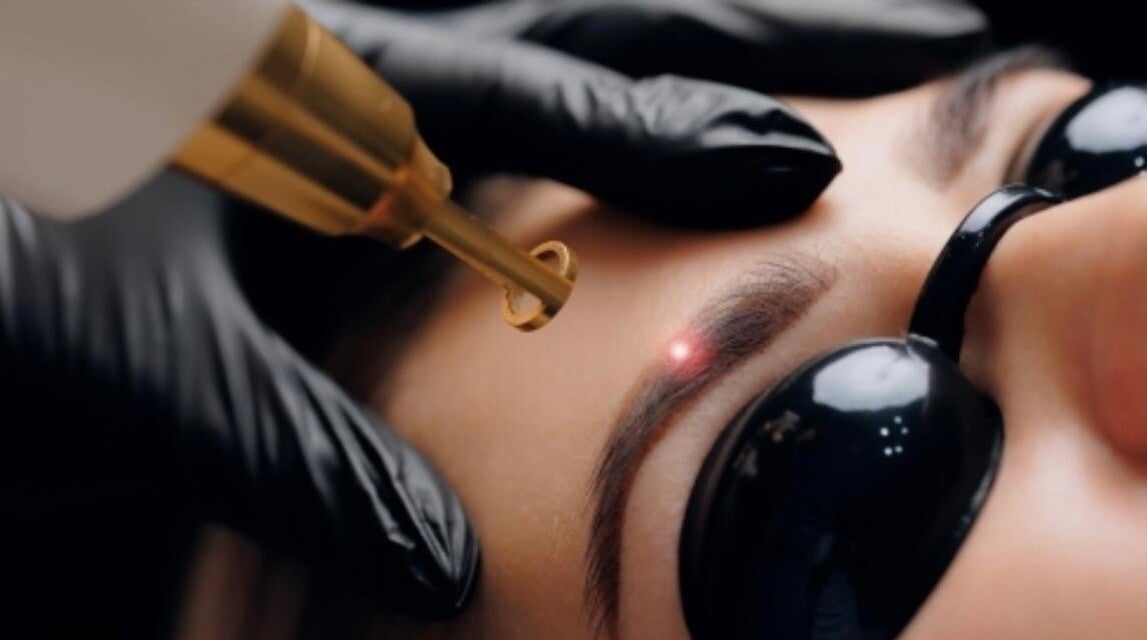
Two brows that look similar can contain very different pigment mixtures, depths and treatment histories.
The course may become staged as dark pigment reveals red, orange, pink or yellow underneath.
Sessions are spaced according to healing and pigment response, not simply how quickly the client wants the brow removed.
Complete removal cannot be guaranteed. A successful outcome may be substantial fading, removal of selected sections or enough reduction for a future brow redesign.
Why estimates remain approximate
The visible brow colour does not reveal the full pigment history beneath the skin. Cosmetic tattoos are often layered, blended and corrected over several appointments.
The exact colour ingredients may be unavailable, and the visible shade does not show how each component will respond.
Manual strokes and machine shading can sit at different depths across the same brow.
Each top-up can add another layer, colour mixture and depth.
Orange, yellow, white, beige or flesh-toned correctors can make removal less predictable.
Laser, saline, acids or other methods can alter both the pigment and the skin.
Healing, inflammation and pigment change vary from person to person.
Partial fading for correction may require fewer sessions than pursuing maximum clearance.
The course may stop when yellow, pale or corrected pigment no longer provides a suitable laser target.
The most responsible estimate is reviewed as treatment progresses. The healed response after each session provides more useful information than the original appearance alone.
What determines treatment length?
| Factor | Why it matters | Possible effect on the course |
|---|---|---|
| Current colour | Dark pigment, red, orange, yellow, white and grey can require different treatment approaches. | The visible colour may determine the wavelength and whether further laser remains appropriate. |
| Pigment density | Dense block shading contains more pigment than light, faded hairstrokes. | Heavily saturated brows may require more sessions. |
| Pigment depth | Deep or uneven implantation may respond more slowly. | The brow can fade unevenly or require a longer staged course. |
| Number of applications | Top-ups and corrections add multiple layers. | Each layer may contain a different colour mixture. |
| Technique | Microblading, powder, ombré and combination brows distribute pigment differently. | Different sections may need separate planning. |
| Age of the pigment | Older brows may already have faded, but they can also contain deeper traditional cosmetic tattoo pigment. | Age alone does not predict easy removal. |
| Previous removal | Laser, saline or chemical procedures can change pigment and scar the skin. | Treatment may need to be slower, adjusted or declined. |
| Skin type and tanning | Surrounding melanin affects wavelength and setting selection. | Treatment may be postponed or use more cautious settings. |
| Healing response | The skin must recover fully before another session. | Intervals may be extended where inflammation or pigment change persists. |
| Final goal | Full removal, partial fading and redesign require different endpoints. | The course may finish once enough fading has been achieved. |
Technique does not tell the whole story
Light, superficial microblading can sometimes respond quickly, but the word “microblading” does not guarantee a short treatment course. Repeated strokes, deep implantation, scar tissue and colour correction can all make removal more complex.
Faded superficial strokes may respond relatively quickly where the pigment colour is suitable.
Several annual top-ups can create overlapping pigment and scar tissue.
Machine shading can produce a larger, denser pigment area that may require more gradual treatment.
The front, body and tail may contain different pigment density and therefore fade at different rates.
Hairstrokes and shading may need separate assessment because depth and density vary.
Older cosmetic tattoos may be deep, saturated and created with different pigment chemistry.
Added orange, yellow, white or skin-toned pigment can create several treatment stages.
Earlier procedures may have altered the response and slowed the safe treatment pathway.
The treatment name is less important than the actual pigment. Consultation and patch testing provide more useful information than whether the brow was marketed as microblading, ombré or semi-permanent makeup.
Why the course can change direction
Eyebrow removal is often a colour journey rather than a simple fade from dark to invisible. Different pigment components can appear one after another.
The darkest component dominates the visible brow before treatment.
Warm pigment may become visible once dark pigment has reduced.
Red and yellow components may remain in a changing proportion.
The remaining colour may be resistant and may mark the safe endpoint of treatment.
A different wavelength, further patch test, longer healing period, another removal method or stopping treatment may be appropriate. The original session estimate can therefore change.
Useful information before the course begins
A patch test can provide valuable information, but it cannot accurately predict the full course. It tests only a small section and one treatment stage.
The immediate appearance may be affected by frosting, swelling and inflammation. The healed result provides the useful information.
The course cannot be safely rushed
The surface may look healed before the deeper recovery and pigment-processing phase has finished. Treatment intervals must allow the skin to settle and the body time to process fragmented pigment.
Redness, swelling, dryness, crusting or blistering must resolve fully.
The treated tissue needs time to recover beyond what is visible from the surface.
Fading can continue for weeks after the brow looks settled.
The next wavelength is selected from the healed colour, not the immediate post-treatment appearance.
The interval may become longer during the course. Later sessions may be spaced further apart where fading continues, the skin needs more recovery or the remaining pigment is becoming more resistant.
Treating incompletely healed skin can increase inflammation, pigment change, scarring and brow-hair damage without providing a proportional improvement in clearance.
How progress is reviewed
Consistent makeup-free photographs help compare colour, density and shape over time.
The brow may become lighter, softer or less defined.
A new red, orange or yellow stage may show that one component has reduced.
The skin should return to a stable condition before another treatment.
Existing scar tissue may become more visible as pigment fades.
Small tests may be repeated when the visible pigment changes.
Enough fading may have been achieved for redesign even when pigment remains.
The course should stop when further treatment offers little realistic benefit.
Progress is not measured only by complete disappearance. Reduced density, softened edges, removal of unwanted tails or enough fading for correction can all be meaningful outcomes.
Several outcomes may be successful
The course continues while pigment responds and the skin remains suitable, but complete removal is not guaranteed.
Treatment stops once a PMU artist has enough flexibility to create a new brow.
Only unwanted fronts, tails, migrated sections or pigment outside the desired shape are treated.
The course stops where the remaining colour no longer responds safely or effectively.
Treatment pauses or stops where white, beige or flesh-toned pigment darkens unpredictably.
Saline or another specialist opinion may be considered after full healing.
Treatment stops because further trauma would create disproportionate risk.
The client may decide the remaining pigment is acceptable without pursuing further removal.
The safest and most cosmetically sensible result may be substantial fading with a small amount of residual pigment.
Why chasing a faster result can cause harm
Once a suitable treatment endpoint has been reached, increasing fluence or overlap can increase tissue injury without creating proportional pigment clearance.
Your treatment journey
Natural-light photographs provide an initial view of colour, shape, density and treatment goal.
We assess pigment history, technique, top-ups, correction, previous removal, skin type, scarring and medical information.
A small section is tested for lightening, colour unmasking, darkening and skin response.
The healed result helps confirm whether the first full treatment remains appropriate.
The agreed brow area is treated using settings based on the visible pigment and healed patch.
The skin heals and pigment clearance continues before another session is planned.
The next treatment is based on the healed appearance, which may be lighter, warmer or different from the original brow.
The likely remaining course is reviewed from actual progress rather than the original estimate alone.
The wavelength, treatment method or endpoint may change as pigment and skin response become clearer.
Continue learning
Eyebrows, eyeliner, colour changes, saline, risks, aftercare and realistic expectations.
Read the cornerstone guide →How suitable laser energy fragments cosmetic pigment and why treatment is often staged.
Read the laser guide →Why mixed cosmetic pigment reveals warmer colours as darker components reduce.
Read the colour-change guide →Why yellow can remain after warmer colours reduce and when further laser should stop.
Read the yellow pigment guide →Why white, beige and flesh-toned pigment may resist treatment or darken.
Read the white pigment guide →How a small test can reveal colour unmasking, darkening and skin response.
Supporting article coming soonFrequently asked questions
There is no reliable fixed number. Some brows show substantial fading after a few sessions, while layered, corrected or colour-changing brows may require a longer course.
Complete removal in one session is not realistic for most cosmetic eyebrow tattoos. Pigment is often layered and may change colour during removal.
Photographs can help with initial screening, but they cannot reveal pigment depth, chemistry, layering or how the skin will respond. Any estimate remains provisional.
Not always. Light superficial strokes may respond quickly, but deep or repeatedly topped-up microblading can take longer. Powder brows also vary greatly in density and depth.
Some older brows have already faded, but others contain deep, dense or older-style pigment. Age alone does not predict the number of sessions.
The brow may reveal a new colour, heal more slowly, contain more layers than expected or reach a resistant stage. Treatment planning is updated from the actual healed response.
Each newly visible colour may require a different wavelength, further patch testing or a different treatment endpoint.
Yellow is often resistant and may not respond adequately. The course may stop with residual yellow rather than continuing indefinitely.
Yes. Pale pigment may resist treatment or darken unexpectedly, which can change or stop the treatment pathway.
No. It provides information about a small area and one stage of the pigment, but it cannot predict the whole course.
The skin must heal fully and pigment clearance must be allowed to continue. The interval is based on the individual response and may be extended as treatment progresses.
Surface healing is only part of recovery. Deeper tissue recovery and pigment processing continue after the visible reaction settles.
Not reliably. Excessive energy can increase burns, pigment change, scarring and hair damage without creating proportional pigment clearance.
Yes. Partial fading for a future redesign may be a suitable endpoint and may require fewer sessions than pursuing maximum clearance.
Selected tails, fronts, migrated sections or pigment outside the desired shape may be treated after assessment.
No. Some brows clear very well, while others leave resistant yellow, pale, grey or shadow pigment.
Treatment may stop when the remaining pigment does not respond, darkens unpredictably, the skin risk increases or no suitable wavelength remains.
Possibly, once the skin is fully healed and stable. A qualified PMU artist should assess whether the colour and texture are suitable for redesign.
Temporary hair lightening or shedding can occur, and permanent hair reduction is a recognised risk.
Yes. Scarring is a recognised risk, particularly if treatment is too aggressive, sessions are too close together or healing skin is disturbed.
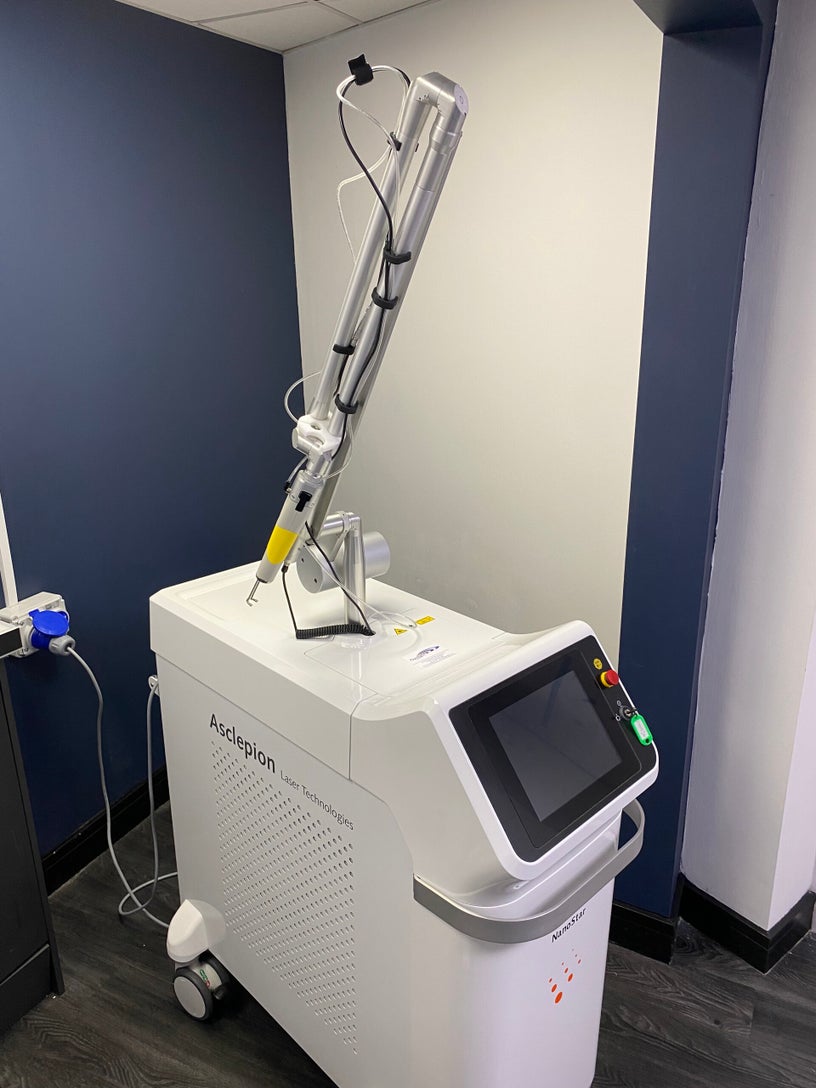
Pulsar performs selected eyebrow tattoo removal using the Asclepion NanoStar Y active Q-switched nanosecond laser at its Chorley clinic.
Start with an individual assessment
Send clear, makeup-free photographs in natural light or book a consultation so we can assess the colour, technique, layering, previous treatments and likely treatment pathway.
Sources and further reading
This guide provides general information and does not replace an individual consultation, patch test or medical advice. Further reading: U.S. FDA — Tattoo Removal: Options and Results; U.S. FDA — Tattoos and Permanent Make-up; Laser Removal of Eyeliner and Eyebrow Tattoos: Experiences and Learnings; Laser Tattoo Removal: A Clinical Update; North Bristol NHS Trust — Tattoo Laser Treatment; American Academy of Dermatology — Laser Tattoo Removal.