

Dark Component Reduces
Black, grey or dark-brown pigment may respond first and stop masking warmer tones.
Pulsar Laser Studio · Cosmetic tattoo colour-change guide
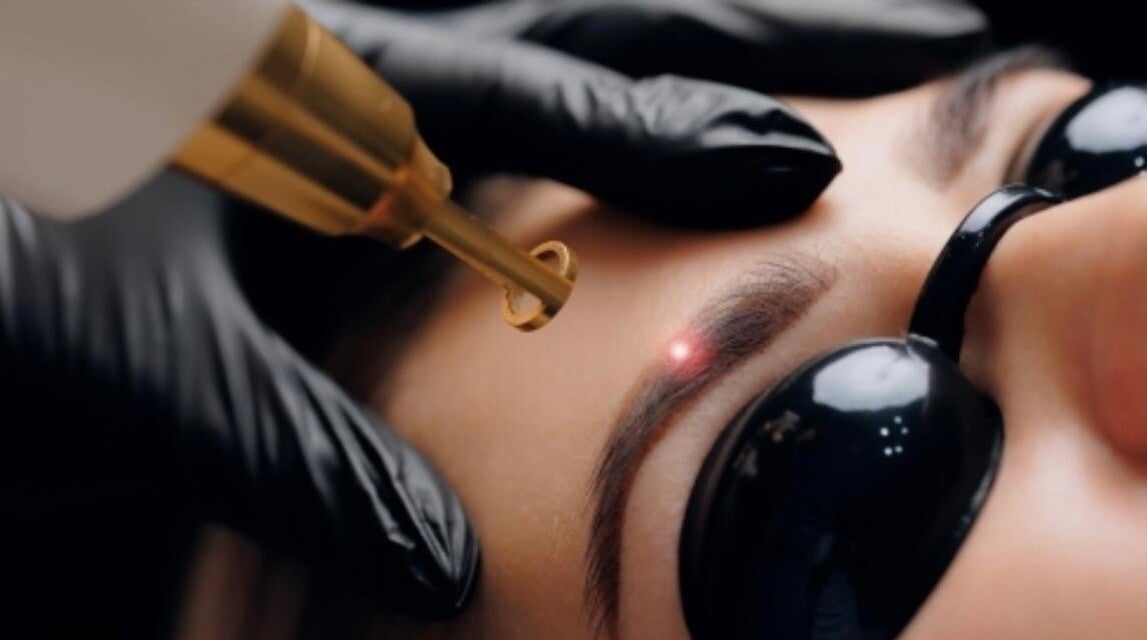
A brown, black or grey eyebrow tattoo is often made from several pigments blended together. Laser may reduce the darkest component first, revealing red, orange, pink or yellow tones that were already present underneath.
Jump to a section
The practical explanation
Usually, no. The warmer colour was commonly already present within the cosmetic pigment blend.
Eyebrow tattoo colours such as brown, taupe, ash, blonde and dark brown are often mixtures rather than single pigments. When a laser reduces the black or darker component, the remaining red, orange, pink or yellow component can become much easier to see.
This is often described as colour unmasking. It can be an expected stage of cosmetic tattoo removal, but it does not guarantee that every remaining colour will respond equally well.

Black, grey or dark-brown pigment may respond first and stop masking warmer tones.
Red, orange, pink or peach pigment may then become the dominant visible colour.
Yellow, cream or flesh-tone pigment may become visible later and can be harder to treat.
A colour change does not automatically mean the treatment has gone wrong. It may show that one component has responded while another remains.
Cosmetic tattoo ink is rarely one simple colour
The precise ingredients vary by brand, product range, practitioner and age of the cosmetic tattoo. Two brows that look almost identical can therefore react very differently.
Used to deepen or cool the overall shade and often targeted first by a 1064 nm pathway.
Used to create warmth and prevent a brown pigment appearing too grey or ashy.
Used to create golden, blonde, warm-brown or skin-toned shades.
May be used to lighten a blend and can make later laser response less predictable.
Common in cosmetic pigment systems and capable of behaving differently according to their chemical form.
A white pigment sometimes used to lighten cosmetic shades and associated with possible darkening after laser exposure.
Modern formulations may contain bright synthetic colourants with variable laser response.
Top-ups by different artists may create several layers with different chemistry and depth.
A photograph can show the present shade, but it cannot confirm every ingredient, layer or previous pigment used. This is why an exact colour sequence cannot be guaranteed in advance.
How the colour may evolve
Cosmetic tattoo removal is often a staged process. The visible colour after each session influences the next decision.
| Visible stage | What may be happening | Possible next step | Important limitation |
|---|---|---|---|
| Black, grey or very dark brown | The darkest pigment component is still dominant. | Assessment of a suitable 1064 nm pathway. | Cosmetic pigment may darken or reveal several warmer layers. |
| Red or red-brown | The dark component has reduced and a warm component is now more visible. | Review and patch testing for a suitable 532 nm pathway. | Skin type and recent tanning are particularly important. |
| Orange, peach or pink | A lighter warm pigment remains, possibly mixed with white or yellow. | Careful staged treatment after healing. | The response may be slower or less predictable. |
| Yellow or golden residue | Darker and redder components may have reduced, leaving a pale resistant pigment. | Reassess whether meaningful laser target remains. | Yellow may absorb available wavelengths poorly. |
| Grey or black after a pale pigment test | Possible paradoxical darkening of iron oxide or titanium-dioxide-containing pigment. | Allow healing and reassess the newly visible dark pigment. | Further treatment must not be rushed. |
The sequence is not identical for everyone. One brow can contain more than one pigment, and different sections may change at different rates.
A different reaction from colour unmasking
Some pale, white, flesh-tone, pink or cosmetic pigments can become grey, dark brown or black after laser exposure. This is called paradoxical darkening.
It is different from simply revealing red or orange pigment. The laser may alter the chemical state of certain pigment compounds, particularly some iron-oxide or titanium-dioxide-containing formulations.
The newly darkened pigment may sometimes become a more suitable target for a later wavelength, but the outcome remains unpredictable and must be assessed only after the skin has healed.
A small test area can reveal immediate darkening or an unexpected colour shift before treating the full brows.
Immediate colour, swelling and frosting can change as the skin settles. The result should not be judged too early.
Sometimes further staged laser treatment is possible, but complete clearance cannot be promised.
Different sections of the brows may contain different pigment brands, top-up layers or depths and may not react exactly like the tested area.
The visible target can change during the course
Commonly assessed for suitable black, grey, dark-brown or very dark cosmetic pigment.
Commonly assessed for suitable red, orange, pink and selected warm residual pigment.
Yellow, white, flesh-tone and some pale mixed pigments may remain resistant or unpredictable.
A wavelength should be selected for the pigment that is visible and safely treatable at that stage. It is not appropriate to assume that every hidden colour should be treated in the same appointment.
Repeated passes or several wavelengths over the same healing tissue may increase inflammation and injury. A staged approach provides clearer information about the response of each pigment component.
The final pale residue can be the most difficult stage
Yellow is a pale colour and may absorb commonly available tattoo-removal wavelengths poorly. It can become more obvious only after black, brown, red or orange components have faded.
Pale yellow pigment may reflect rather than strongly absorb the wavelengths available for treatment.
Yellow may be blended with white or flesh-tone pigment, making the behaviour less predictable.
Repeatedly treating faint residue can increase skin stress without proportionate benefit.
An immediate yellow appearance can sometimes look different after swelling and the treatment reaction have settled.
Complete removal cannot be guaranteed. A faint yellow shadow may remain even after the darker and warmer components have reduced substantially.
A staged, consultation-led pathway
We ask about pigment age, number of top-ups, previous artists, known brands, previous saline or laser treatment and healing reactions.
We examine the brows in suitable lighting and consider whether the visible colour is black, grey, brown, red, orange, pink, yellow or mixed.
Skin type, recent sun exposure, medication, health history and previous pigment or scar changes are reviewed.
A small area is tested to assess immediate response, colour change and healing before treating the full brow.
The wavelength and settings are selected for the visible target rather than for the original colour description alone.
The next decision is made only after swelling, colour change and skin recovery have settled.
A warmer or paler component may now be visible and may require another patch test or a different wavelength.
Where little responsive target remains, further laser may be declined rather than repeatedly stressing the skin.
Eyebrow tattoo removal is not one fixed treatment repeated unchanged. The plan may need to evolve as each pigment layer becomes visible.
Do not judge the final colour immediately
A temporary white or pale reaction may appear immediately after the pulse.
The brow area can become red, raised or swollen for a short period.
Pigment may initially look darker before the treatment reaction settles.
Red, orange, pink or yellow may become clearer as the darker component reduces.
Laser, saline or correction?
Laser is not the only possible pathway for unwanted cosmetic pigment, and it should not be continued indefinitely when the remaining target is poorly responsive.
Appropriate where a visible pigment responds safely and meaningfully to a suitable wavelength.
A trained saline-removal practitioner may assess selected residual cosmetic pigment, although results and risks still vary.
Once the skin is fully settled, a skilled permanent-makeup artist may assess whether correction or a new design is realistic.
The skin and pigment must be fully settled before saline treatment, correction or new permanent makeup is considered.
Frequently asked questions
The dark component may have reduced first, revealing red pigment that was already part of the cosmetic tattoo blend.
Orange may be a residual warm component underneath a darker brown or black pigment. It can become more visible as the dark component fades.
Yellow may remain after black, brown, red or orange components reduce. Pale yellow can be more resistant because it may absorb available wavelengths poorly.
Usually the warmer colour was already present. The laser may have unmasked it by reducing another component more quickly.
Suitable red and red-brown pigment may respond to a carefully selected 532 nm pathway after assessment and patch testing.
Some orange pigment may respond to 532 nm treatment, but the exact chemistry, skin type and previous reaction affect suitability.
Sometimes partial improvement is possible, but yellow is often resistant and complete clearance cannot be guaranteed.
Yes. Some pale cosmetic pigments can darken after laser exposure. This is known as paradoxical darkening.
Not necessarily. The area must first heal and be reassessed. In some cases the new dark pigment may become a target for later staged treatment.
Not automatically. A staged approach is usually safer and allows the response to one wavelength to be assessed before selecting another.
1064 nm is generally assessed for suitable dark pigment. Red and orange pigment are more commonly assessed with 532 nm.
No. Surrounding melanin can also absorb 532 nm light, so skin type, tanning and settings require careful individual assessment.
It can reveal unexpected colour change, darkening or skin response before the full eyebrow area is treated.
No. Different sections may contain different pigments, top-up layers or depths.
A qualified saline-removal practitioner may assess it, but results are not guaranteed and the skin must be fully healed first.
Only after the skin and pigment have fully settled and an experienced permanent-makeup artist has assessed the remaining colour and texture.
Tattoo-removal wavelengths target pigment rather than being designed for hair reduction. Temporary whitening or singeing can occur, but individual responses vary.
Pulsar generally allows adequate healing and pigment-processing time, commonly around eight weeks or longer depending on the reaction and remaining colour.
No. Resistant yellow, white, flesh-tone pigment, colour change, residual shadowing or pre-existing texture may remain.
No. Pulsar uses the German-engineered Asclepion NanoStar Y active Q-switched nanosecond laser with 1064 nm and 532 nm wavelengths.
Continue reading
Consultation, patch testing, colour stages, treatment planning and realistic expectations.
View treatment →Why wavelength, ink chemistry and visible colour affect treatment.
Read article →Why pulse duration is only one part of a complete laser system.
Read article →How to protect the treated skin and recognise warning signs.
Read article →Why healing and pigment processing cannot be rushed.
Read article →Recognised risks, existing tattoo texture and ways to reduce avoidable complications.
Read article →Start with a colour assessment
Send clear photographs in natural light and details of any previous laser, saline or permanent-makeup treatment. We will assess the visible colour, skin response and whether a staged laser pathway is appropriate.
Sources and further reading
This guide provides general information and does not replace an individual consultation, patch test or medical assessment. Cosmetic tattoo pigments vary substantially, and exact ingredients are often unknown. Further reading: Laser Tattoo Removal: A Clinical Update; Optimising Laser Tattoo Removal; Lasers in Tattoo and Pigmentation Control; U.S. FDA — Tattoo Removal Options and Results; Asclepion NanoStar Technology.