

Before
Makeup-free colour, shape, density, skin texture and brow hair are documented.
Pulsar Laser Studio · Eyebrow removal results guide
Before-and-after photographs can be helpful, but only when the treatment stage is clear. This guide explains what eyebrows may look like before laser, immediately afterwards, during healing and after the pigment has had time to fade.
Jump to a section
The most important point
An eyebrow tattoo can look dramatically different immediately after laser treatment. Frosting, redness, swelling, raised texture, hair whitening and sudden colour changes may all be visible.
These early changes do not show how much pigment will ultimately clear. The skin must recover and the body continues processing fragmented pigment over the following weeks.
A meaningful before-and-after comparison should therefore use a clear pre-treatment photograph and a fully healed photograph taken under similar conditions.
Makeup-free colour, shape, density, skin texture and brow hair are documented.
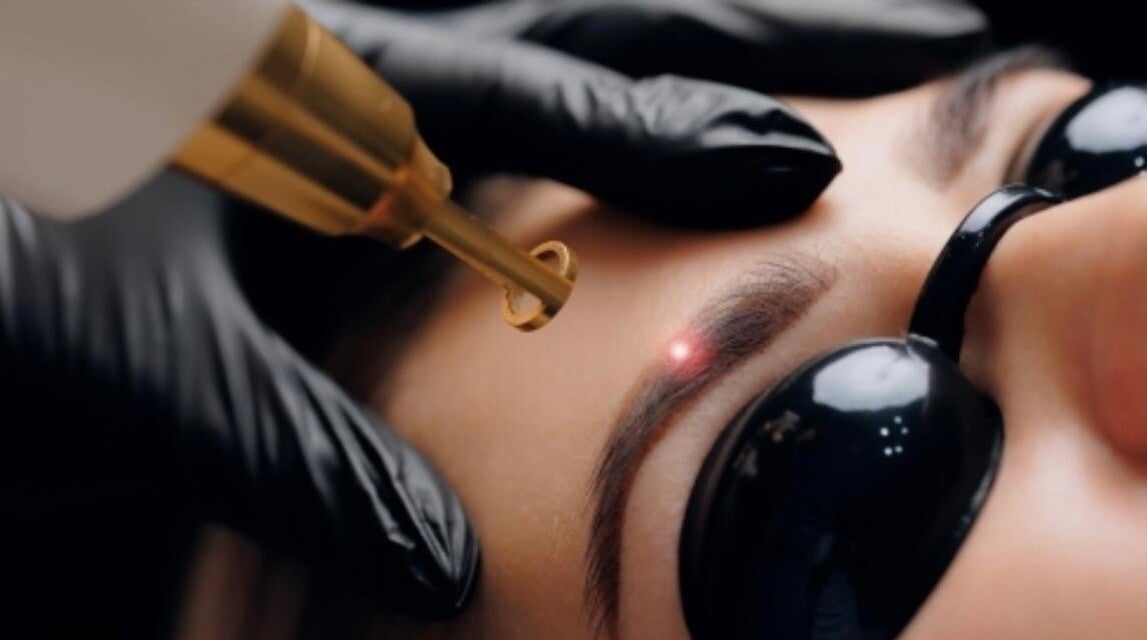
Frosting, redness, swelling or a temporary colour shift may be visible.
The true response is reviewed only after the skin settles and fading develops.
A dramatic immediate reaction does not guarantee dramatic final clearance. Equally, a modest immediate reaction does not automatically mean the session has failed.
The starting point
Pencil, tint, concealer and foundation can hide the true pigment colour and shape.
Neutral lighting makes grey, red, orange, yellow and blue undertones easier to assess.
The front, body, arch and tail should all be visible.
Photographing both sides helps document pre-existing asymmetry.
Raised, shiny, indented or scarred areas should be recorded before laser.
Brow density, colour and areas of reduced growth should be visible.
A close-up shows pigment detail while a full-face image shows overall balance.
A straight-on image makes later comparisons more reliable.
Minutes after laser
| Visible reaction | What it may look like | What it means |
|---|---|---|
| Frosting or whitening | A temporary white or pale surface reaction over treated pigment. | A rapid laser-tissue reaction has occurred; it is not the final colour. |
| Redness | Pink or red skin around and through the brow. | A common short-term inflammatory response. |
| Swelling | The brow may look raised, puffy or temporarily wider. | The treatment area is reacting; swelling should settle rather than worsen. |
| Darker pigment | The brow may appear deeper brown, grey or black. | This may be temporary, but pale pigments can also darken chemically and require reassessment. |
| Brighter warm colour | Red, pink, orange or yellow suddenly becomes visible. | A darker pigment component may have reduced or another colour may have been unmasked. |
| White brow hairs | Natural hairs may look blonde, grey or white. | Hair pigment may have temporarily changed; this does not show the final hair outcome. |
Early healing
Puffiness usually reduces as the early inflammatory response calms.
The white surface reaction normally fades quickly.
The brow may look darker, warmer, patchier or less dramatic than it did immediately after treatment.
Mild sensitivity should improve rather than become increasingly painful.
The surface may become dry or develop light crusting during recovery.
Blistering can occur and should be protected rather than deliberately burst.
Whitened, singed or shortened hairs can be temporarily more noticeable.
Pigment clearance continues long after the surface looks healed.
The meaningful comparison
The visible pigment may be softer, lighter or less saturated.
Unwanted fronts, tails, arches or migrated sections may look less prominent.
Red, orange, pink, yellow, grey or blue-grey may replace the original dark colour.
Dense borders, tails, strokes or top-up layers may remain darker.
A faint pale, grey or yellow tone may remain even after strong fading.
Pre-existing scar tissue may become easier to see as pigment reduces.
Some whitened or shed hair may recover, although the outcome varies.
The remaining colour may require a different wavelength, more healing time or a decision to stop.
Why the “after” colour may surprise you
| Before treatment | Possible healed after-stage | Why this may happen |
|---|---|---|
| Dark brown or black | Red, pink or warmer brown | The dark component has reduced and warmer ingredients are now visible. |
| Grey or blue-grey | Lighter grey, red-brown or patchy shadow | Depth, pigment chemistry and older layers can affect the remaining tone. |
| Red or pink | Orange or yellow | Red components may reduce while yellow remains. |
| Orange | Yellow or pale warm shadow | The red component may respond more readily than yellow. |
| White, beige or flesh-toned pigment | Grey, blue-grey or black darkening | Certain pale pigments can change chemically after laser exposure. |
| Mixed topped-up brow | Several colours across different sections | Different layers, brands and techniques may respond at different speeds. |
How to compare results fairly
Add your own consented case images
Replace the placeholders below with your own unedited, consented client photographs. Each case should clearly state the stage, number of sessions and whether the image is immediate or fully healed.
Suggested caption: pigment colour, technique, number of sessions and healing interval.
Clearly label each image as immediate or healed.
State that individual outcomes vary and complete removal is not guaranteed.
Why one client’s result cannot predict another’s
Dark, red, orange, yellow, grey, white and flesh-toned pigments respond differently.
Different brands and ingredients can behave differently under laser.
Deep pigment may fade more slowly than superficial cosmetic pigment.
Dense shading and block brows usually require a longer course.
Repeated refresh appointments can create several overlapping layers.
Microblading, powder, ombré, combination and traditional tattooing may respond differently.
Skin type, tanning, inflammation, aftercare and individual clearance all matter.
Laser, saline, acids or previous injury can alter pigment and skin texture.
How results develop over a course
The brow can become lighter or reveal a warmer undertone.
Red, orange or pink may require a different treatment approach after healing.
These colours may respond poorly and can become the safest endpoint.
Tails, borders, old strokes or repeatedly topped-up areas can remain darker.
Complete removal may not be necessary where enough space has been created for future PMU.
The course may finish when further laser is unlikely to provide safe, useful improvement.
Natural eyebrow hair in photographs
Dark hairs may look white, blonde, grey or coppery immediately after treatment.
Visible hairs may appear curled, brittle or shorter.
Some hairs may shed during the days or weeks after treatment.
Dense natural brow hair may make residual pigment look less visible in photographs.
Brow pencil or tint can make an after image look fuller or darker than the true pigment.
Hair density can look different at separate appointments even without permanent damage.
Old scar tissue or previous tattooing may already have reduced growth.
Lasting thinning is a recognised risk if follicles are injured or scarred.
Protecting the healing result
Always follow the individual instructions provided at your appointment. The guidance below is general.
Your photographed treatment journey
Natural-light images provide an initial view of colour, shape and density.
We assess pigment, top-ups, technique, skin texture, hair and medical information.
Consistent baseline photographs document colour, shape and pre-existing texture.
A small area is tested for fading, colour change, darkening and skin response.
The agreed area is treated using settings based on the healed patch.
Immediate photographs are stored separately from healed outcome photographs.
The healed image is taken under similar lighting, angle and makeup-free conditions.
The decision to continue, change wavelength or stop is based on the healed result.
Continue learning
Eyebrows, eyeliner, colour changes, saline, sessions, risks and aftercare.
Read the cornerstone guide →How suitable laser energy fragments cosmetic pigment and why treatment is staged.
Read the laser guide →What affects treatment length and why estimates can change.
Read the session guide →Why warmer pigment can become visible as darker components reduce.
Read the colour-change guide →How hairstroke pigment, top-ups, depth and colour changes affect removal.
Read the microblading guide →Temporary whitening, shedding, regrowth and permanent reduction risk.
Read the brow-hair guide →Frequently asked questions
They may look white or frosted, red, swollen, raised, darker, brighter or temporarily uneven.
No. The immediate appearance includes swelling and surface reaction. The skin must heal before the result can be assessed.
Frosting is usually temporary and can fade quickly, although the wider healing response continues.
Mild swelling often settles over the first few days. Worsening or significant swelling should be discussed with the clinic.
Temporary darkening can come from swelling or surface reaction, while pale cosmetic pigments can sometimes darken chemically.
The darker component may have reduced first, revealing red or pink pigment that was already present.
Yes. Mixed cosmetic pigments may reveal orange or yellow as darker and red components reduce.
Yes. Different sections can contain different pigment density, depth, colour and scar tissue.
They should be taken only after the surface has recovered and enough time has passed for the session response to become meaningful.
No. Residual yellow, pale, grey or shadow pigment and pre-existing texture may remain.
Do not apply makeup over broken, blistered, crusted or irritated skin.
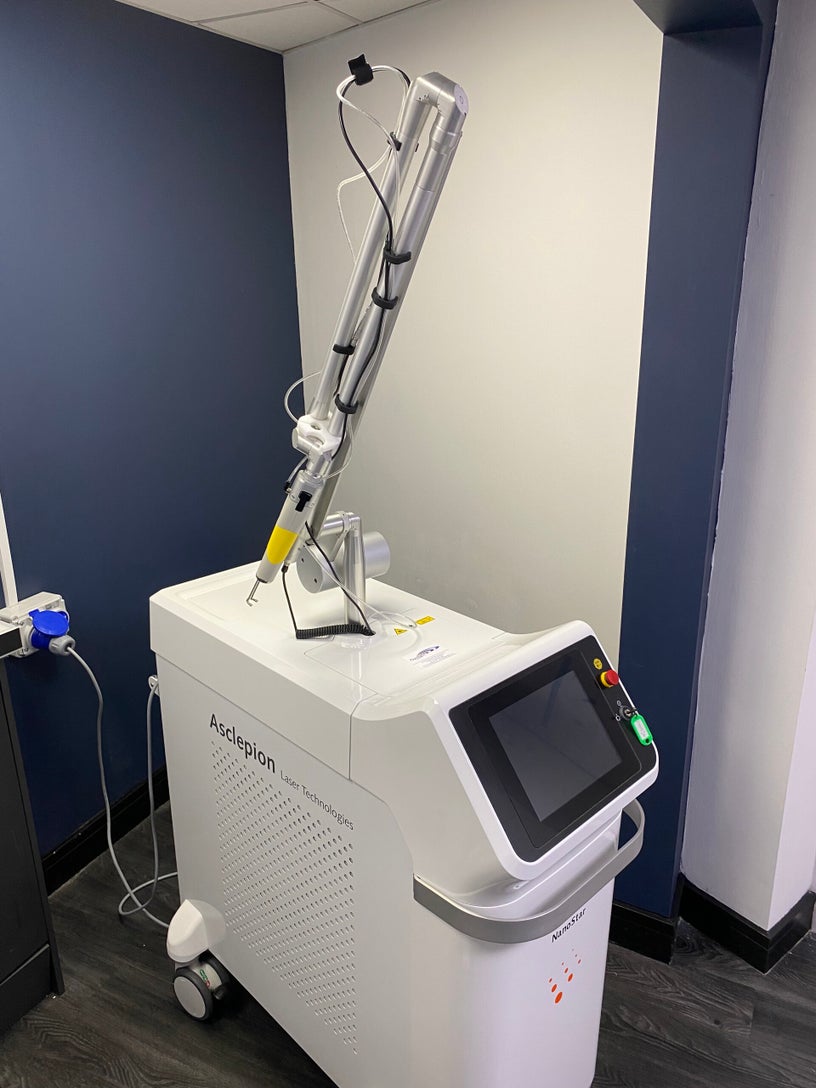
Pulsar performs selected eyebrow tattoo removal using the Asclepion NanoStar Y active Q-switched nanosecond laser at its Chorley clinic.
Start with an individual assessment
Send clear, makeup-free photographs in natural light or book a consultation so we can assess the colour, shape, top-ups, skin texture and realistic removal pathway.
Sources and further reading
This guide provides general information and does not replace an individual consultation, patch test or medical advice. Further reading: Laser Removal of Eyeliner and Eyebrow Tattoos: Experiences and Learnings; Lasers for the Treatment of Eyebrow Microblading and Cosmetic Tattoo Pigment: A Review; U.S. FDA — Tattoo Removal: Options and Results; U.S. FDA — Tattoos and Permanent Makeup Fact Sheet; North Bristol NHS Trust — Tattoo Laser Treatment.