

Assess the True Colour
The upper lip, lower lip, border, corners and any overdrawn sections are reviewed separately.
Pulsar Laser Studio · Lip blush removal guide
Selected lip blush pigment may be reducible with laser, but treatment can be more complex than the soft surface colour suggests. Red, pink, orange, yellow, white and flesh-toned ingredients may respond differently, so consultation and patch testing are essential.
Jump to a section
The honest answer
Selected lip blush may be reduced with laser, but not every pigment is suitable and complete removal cannot be guaranteed.
Lip blush is usually created from blended cosmetic colours rather than one pure pigment. A soft nude or pink result may contain red, orange, yellow, white, beige or flesh-toned ingredients that do not all respond in the same way.
One colour may lighten while another becomes more visible. Pale pigment can also darken unexpectedly, which is why a cautious patch-test-first pathway is important.
The upper lip, lower lip, border, corners and any overdrawn sections are reviewed separately.
A small section is tested for lightening, colour change, darkening and healing.
The next decision is based on the fully healed colour and lip response.
Nude, beige, peach and flesh-toned lip blush may contain light-reflective pigments that can resist laser treatment or darken to grey, blue-grey or black.
Cosmetic lip tattooing explained
Lip blush is a form of cosmetic tattooing designed to enhance lip colour, shape and definition. Pigment may be placed through the natural lip tissue and sometimes slightly beyond the natural border.
Pigment is often implanted as a translucent or layered tint rather than a solid lipstick effect.
The outline may be reinforced to create a sharper or more symmetrical shape.
Warm orange, peach or yellow modifiers may be used to neutralise naturally cool or dark lips.
Pink, red, coral, orange, yellow, brown, white and beige ingredients may be blended.
Several passes may create different density and depth across the lip.
Refresh appointments can add new pigment over earlier colour.
Pigment may extend beyond the natural vermilion border in selected areas.
Faded lip blush can become patchy, cool, grey, orange, red or uneven over time.
Why soft-looking pigment can be difficult
The colour seen on the surface may not reveal the full pigment mixture. Removal decisions may need to change after the patch test or after another colour becomes visible.
Which cases may be considered?
Selected red or pink residual pigment may be assessed where the colour and skin response are suitable.
Patchy or asymmetrical pigment may be considered for localised reduction.
Pigment outside the desired natural lip edge may sometimes be treated selectively.
Grey, blue-grey or darkened pigment may be assessed individually.
Unwanted corners, peaks or asymmetrical sections may be considered for partial treatment.
Strong red, coral or orange pigment may be assessed for reduction rather than guaranteed clearance.
Earlier laser or saline removal does not automatically prevent treatment, but the skin and pigment must be reassessed.
Partial fading may be enough where the aim is to create a softer base for future work.
White, beige, flesh-toned and some yellow pigments may resist treatment or darken unexpectedly. Treatment may be delayed, modified or declined.
How common lip colours may behave
| Visible colour | What may be present | Possible removal consideration |
|---|---|---|
| Red or pink | Red pigment with possible white, yellow, orange or brown ingredients. | Part of the pigment may respond, but a different undertone may become visible. |
| Orange or coral | Red and yellow components blended together. | The red component may reduce while yellow remains. |
| Yellow or golden | Yellow modifier used alone or beneath other colour. | Yellow may respond poorly and become the final visible stage. |
| Nude, beige or flesh-toned | White, beige, brown, red or yellow ingredients. | Unexpected darkening is possible and patch testing is essential. |
| Brown or mauve | Red, blue, black, yellow or white components. | One component may reduce and reveal a warmer or cooler colour. |
| Grey or blue-grey | Existing darkening, cool correction pigment or deeper colour. | Suitability depends on the cause, depth, skin tone and patch response. |
A colour change does not automatically mean treatment has failed. It can mean one component has reduced and another has become more visible.
A major cosmetic pigment risk
Some pale cosmetic pigments contain compounds that can change chemically when exposed to laser energy. Instead of becoming lighter, the treated pigment may darken to grey, blue-grey, brown or black.
White ingredients used to create soft pink or nude shades may darken unexpectedly.
Camouflage pigment used around the border may react differently from the main lip colour.
Earlier correction or lightening pigment may not be obvious before treatment.
Top-ups by different artists can create several unknown formulations.
The test spot may become grey or black during or soon after treatment.
The final darkened tone may become clearer only after swelling settles.
Darkened pigment may require reassessment rather than immediate repeat treatment.
Laser may be declined if the reaction is unsafe, unpredictable or cosmetically unacceptable.
Pale lip blush can carry a greater risk of paradoxical darkening than the visible colour suggests.
Herpes simplex and lip procedures
Yes. Trauma, heat and inflammation around the lips can reactivate herpes simplex in people who have previously experienced cold sores.
Contact the clinic before your appointment. Treatment should be postponed until the area is fully resolved and any necessary medical advice has been obtained.
Before treating a larger area
The border, centre, upper lip and lower lip may contain different colours, density, depth and correction layers. Patch testing reduces uncertainty but cannot remove every risk.
How suitable lip pigment is reduced
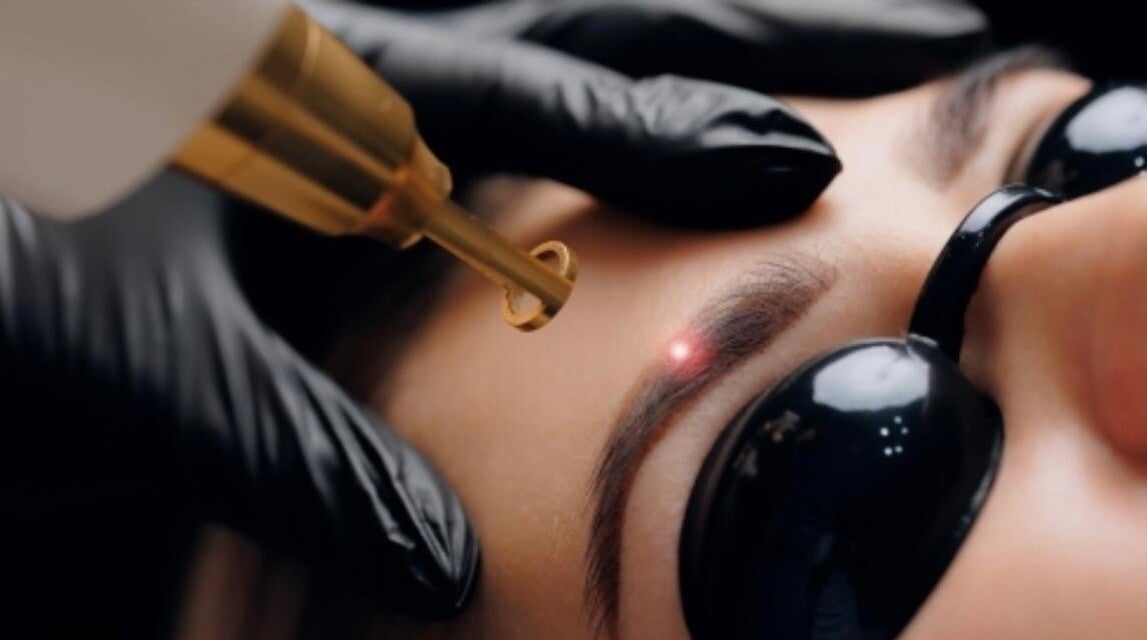
A suitable wavelength delivers a very short pulse of energy into responsive pigment. The pigment absorbs the pulse and larger particles are fragmented into smaller pieces.
The body then gradually processes part of the fragmented pigment over the following weeks. The colour does not simply disappear during the appointment.
The lips are reviewed for colour, density, border placement, top-ups and skin condition.
The patch checks for fading, colour change, darkening and healing.
The wavelength must match the currently visible pigment and surrounding skin.
Larger pigment particles are fragmented while surrounding exposure is controlled.
Whitening, redness, swelling, warmth or colour change may occur.
The surface settles while pigment clearance continues beneath it.
The next decision is based on the fully healed result rather than the immediate appearance.
Treatment numbers and expectations
There is no reliable fixed number. A small overdrawn red section may respond differently from full-lip nude pigment, multiple top-ups or colour-corrected lips.
Red, pink, orange, yellow, brown, white and beige respond differently.
The visible shade may contain several ingredients with different laser responses.
Dense borders and repeatedly reinforced sections may require more treatment.
Deep or uneven pigment may fade slowly or remain as a shadow.
Several appointments can create mixed layers and colours.
Orange, yellow, white or flesh-toned modifiers can extend or stop treatment.
The lips must recover fully before another treatment is considered.
Correcting an overdrawn edge may take fewer sessions than full-lip clearance.
Complete removal cannot be guaranteed. A successful outcome may be substantial fading, correction of an unwanted section or enough reduction for a future redesign.
Immediate and early appearance
The lips may look fuller, puffy or temporarily uneven.
A temporary pale surface reaction may appear over responsive pigment.
The treated area may appear brighter red or irritated for a short period.
Pink, red, orange or yellow pigment may temporarily look stronger.
Pale pigment may become grey, blue-grey, brown or black.
The lips may feel sore, tight or sensitive while healing begins.
The surface may become dry or develop light crusting.
Tingling, burning or grouped blisters require prompt advice.
The immediate appearance is not the final result. Swelling and surface reaction can temporarily distort colour, symmetry and lip shape.
Balanced safety information
When pale or resistant pigment remains, increasing energy or shortening intervals can increase tissue injury without producing proportional improvement.
When treatment may be delayed or declined
Tingling, burning, blistering or an active outbreak means treatment must be postponed.
Broken, infected or inflamed lip tissue must heal first.
Unexpected darkening, excessive injury or poor healing may stop treatment.
White, beige or flesh-toned pigment may create unacceptable darkening risk.
Fresh lip blush, filler, surgery or other trauma requires full healing before assessment.
Sun or tanning exposure can increase pigmentary risk around the mouth.
Medication, immune status or healing history may require medical advice or delay.
Treatment may be declined where complete clearance is demanded despite resistant pigment.
Supporting lip recovery
Always follow the individual instructions provided at your appointment. The guidance below is general.
Seek advice for increasing pain, spreading redness, increasing heat, pus, fever, extensive blistering, delayed healing, severe swelling, signs of a cold-sore outbreak or any reaction that concerns you.
Your treatment journey
Natural-light photographs provide an initial view of colour, border placement and asymmetry.
We review pigment history, top-ups, cold sores, filler, medication, skin and treatment goals.
A small section is tested for fading, colour change, darkening and healing.
The immediate colour and swelling are not used as the final result.
The agreed section is treated using settings based on the healed patch.
The plan may change if orange, yellow, grey or darkened pigment appears.
Treatment ends when the goal is achieved or further laser is no longer safe or useful.
A qualified PMU artist should assess the final colour and tissue condition before new work.
Continue learning
Eyebrows, eyeliner, lip blush, colour changes, risks and aftercare.
Read the cornerstone guide →Why white, beige and flesh-toned pigment can resist treatment or darken.
Read the white-pigment guide →Why yellow may remain after red, orange or darker components reduce.
Read the yellow-pigment guide →How blended pigment can reveal warmer or unexpected colours during removal.
Read the colour-change guide →Why internal ocular shields are essential for laser treatment beside the eye.
Read the eyeliner guide →How to distinguish immediate reactions from fully healed treatment outcomes.
Read the results guide →Frequently asked questions
Selected lip blush may be reduced where pigment colour, composition, skin tone, medical history and patch-test response are suitable.
Not necessarily. The visible shade may contain several pigment ingredients that respond differently.
Some red pigment may respond to a suitable wavelength, but the full mixture and skin response must be assessed.
Possibly. Pink often contains red plus white, beige or yellow ingredients, which can complicate the response.
Orange may contain red and yellow. The red component may respond while yellow remains.
Yellow is often resistant and may become the final visible colour after other components reduce.
It may be assessed, but nude and flesh-toned shades can contain pale pigments that may darken unexpectedly.
White, beige or flesh-toned cosmetic pigment may change chemically after laser exposure.
Possibly, but it must be allowed to heal and be reassessed. Further treatment is not automatic.
A patch test checks lightening, colour change, darkening, swelling and healing before a larger area is treated.
Not necessarily. The border, centre, upper lip and lower lip may contain different pigment mixtures and density.
Complete removal in one session is not realistic for most cases.
The number depends on colour, pigment mixture, density, depth, top-ups, correction, healing and your final goal.
Selected overdrawn borders, corners, peaks or uneven patches may sometimes be treated separately.
Yes. Lip trauma can reactivate herpes simplex in people with a previous cold-sore history.
Medical advice may be needed if you have a cold-sore history. Only an appropriate prescriber should advise or prescribe antiviral medication.
No. Treatment must be postponed until the outbreak has fully resolved.
Possibly, but the filler date, healing, anatomy and any complications must be assessed first.
Swelling is common and can temporarily change the size and symmetry of the lips.
Yes. Small blisters, dryness or crusting can occur and should not be picked or deliberately burst.
No. Residual yellow, pale, grey, darkened or shadow pigment may remain.
Do not apply lipstick, gloss or makeup over broken, blistered, crusted or irritated skin.
Only after the lips are fully healed and stable and a qualified PMU artist confirms suitability.
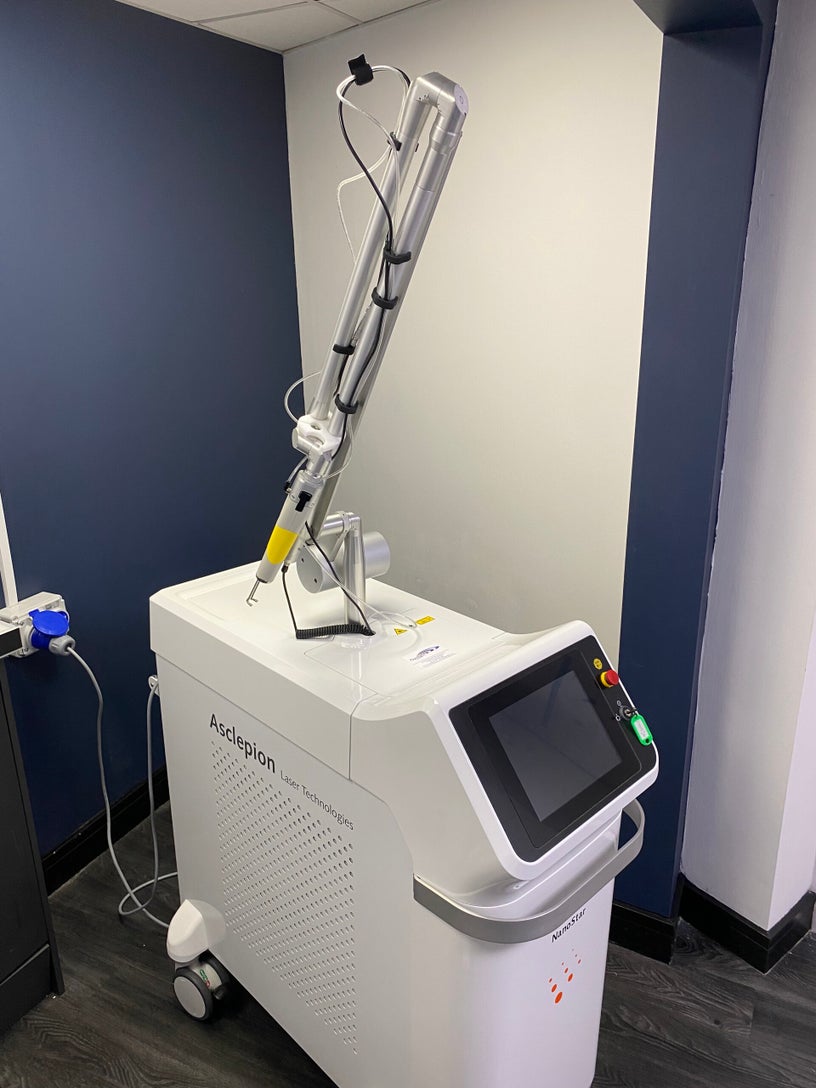
Pulsar assesses selected lip blush removal cases at its Chorley clinic using the Asclepion NanoStar Y active Q-switched nanosecond laser.
Start with an individual assessment
Send clear, makeup-free photographs in natural light or book a consultation so we can assess the colour, border, top-ups, cold-sore history, skin condition and safest removal pathway.
Sources and further reading
This guide provides general information and does not replace an individual consultation, patch test, medical advice or advice from a prescribing clinician regarding cold-sore prevention. Further reading: Lasers for the Treatment of Eyebrow Microblading and Cosmetic Tattoo Pigment: A Review; U.S. FDA — Tattoo Removal: Options and Results; U.S. FDA — Tattoos and Permanent Makeup Fact Sheet; North Bristol NHS Trust — Tattoo Laser Treatment.