

Assess the Pigment
Colour, depth, technique, top-ups, correction and skin condition are reviewed.
Pulsar Laser Studio · Microblading removal guide
Yes, selected microblading can be reduced with laser where the pigment colour, skin type and patch-test response are suitable. This guide explains how microblading removal works, why colours may change and what realistic results look like.
Jump to a section
The honest answer
Yes, many microbladed eyebrows can be reduced with laser, but not every pigment behaves predictably and complete removal cannot be guaranteed.
Some fine, faded strokes respond quickly. Other brows require a longer course because the pigment is deep, repeatedly topped up, colour-corrected, scarred or blended with red, yellow, white or flesh-toned ingredients.
Microblading removal is often a staged colour process. A dark brown brow may first become red, orange, pink or yellow before it becomes lighter overall.
Colour, depth, technique, top-ups, correction and skin condition are reviewed.
A small area is tested for fading, colour change, darkening and skin response.
The plan is updated from the healed colour after each session.
“Semi-permanent” does not mean one-session removal. Microblading pigment is still implanted into the skin and may remain for years.
Cosmetic hairstrokes explained
Microblading is a form of cosmetic tattooing in which fine manual strokes are created to imitate natural eyebrow hairs. Pigment is deposited into the skin using a handheld tool.
Individual cuts or channels are created to imitate natural hair.
Strokes may be superficial, deep or uneven depending on technique and skin.
Annual or frequent refreshes can create overlapping layers of pigment.
Brown and taupe pigments may contain black, red, orange, yellow, grey and white ingredients.
Strokes can soften, merge or spread as the pigment ages.
Repeated cuts, deep implantation and previous removal can alter skin texture.
Orange, yellow, beige or flesh-toned pigment may have been added later.
Residual pigment may remain long after the original hairstrokes have faded.
Which cases may be suitable?
Older black, dark-brown or grey strokes may provide a suitable laser target.
Layered microblading may be treatable but often requires a longer course.
Strokes that have become blocky or indistinct may be assessed for reduction.
Full or partial removal may be considered where the design is unsuitable.
Selected sections may be treated to improve balance before redesign.
Red, orange or yellow stages may be considered after separate assessment.
Earlier laser or saline removal does not automatically prevent treatment, but skin and pigment must be reassessed.
Complete removal may not be required where enough space can be created for redesign.
White, beige, flesh-toned and some yellow or corrected pigments can resist treatment or darken unexpectedly. Laser may be delayed, changed or declined.
How pigment is reduced
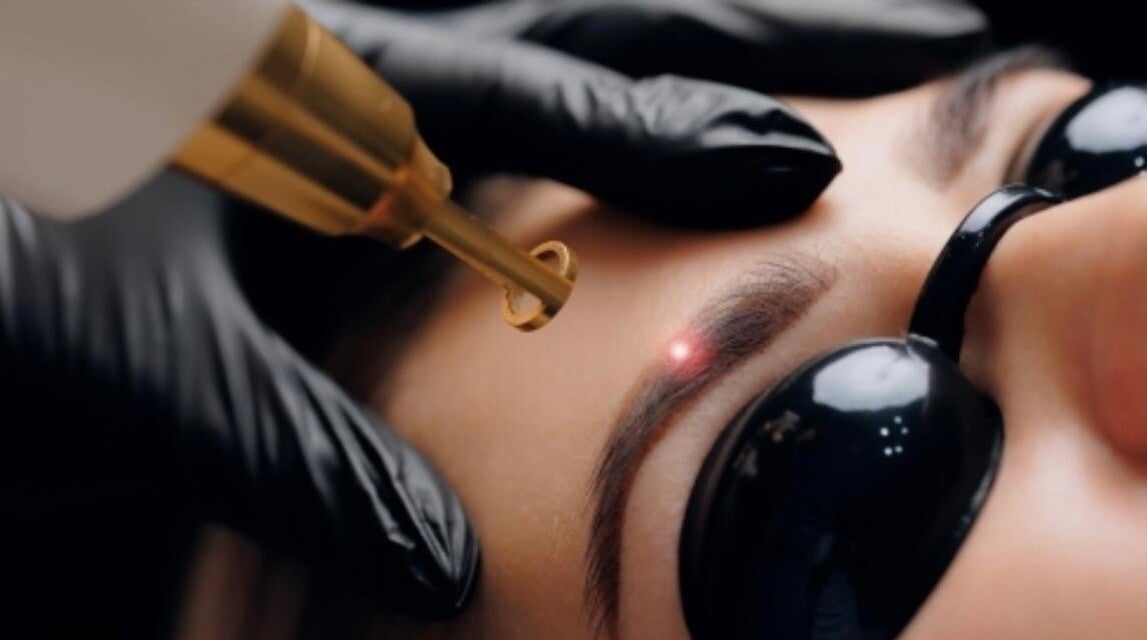
A suitable wavelength delivers a very short pulse of energy into responsive pigment. The pigment absorbs the pulse and larger particles are fragmented into smaller pieces.
The body then gradually processes part of the fragmented pigment over the following weeks. The pigment does not simply disappear during the appointment.
Current colour, undertone, density, depth and skin type are reviewed.
The wavelength must suit the visible pigment and surrounding skin.
Responsive particles are fragmented by the short laser pulse.
Frosting, redness, swelling, warmth or temporary colour change may occur.
The surface settles while pigment clearance continues beneath it.
The next treatment decision is based on the healed result.
Why brows may look warmer
Natural-looking microblading colours are often blends. When a dark component reduces, warmer pigment that was already present can become visible.
| Visible stage | What may be happening | Possible next step |
|---|---|---|
| Dark brown or black | The dark component dominates before treatment. | A wavelength suitable for dark pigment may be considered. |
| Red or pink | The dark component has reduced and warm pigment is now visible. | A different wavelength may be required after healing. |
| Orange | Red and yellow components may remain together. | Further treatment depends on the true colour and skin type. |
| Yellow | A resistant yellow component may be the final visible colour. | Laser may provide limited benefit and treatment may need to stop. |
| Grey or blue-grey | Pigment chemistry, depth or previous correction may affect the tone. | Reassessment and patch testing are required. |
| Sudden darkening | White, beige or flesh-toned pigment may have changed chemically. | Pause treatment and review the healed patch. |
Before a full treatment
Different sections can contain different pigment mixtures, depths and scar tissue. Patch testing reduces uncertainty but cannot remove every risk.
Treatment numbers
There is no reliable fixed number. Light superficial strokes may show substantial fading after a small number of sessions, while dense, layered or corrected brows may require a much longer course.
Dark pigment, red, orange, yellow, white and grey respond differently.
Deep or uneven strokes may fade more slowly.
Repeated appointments create overlapping pigment layers.
Orange, yellow, white or flesh-toned correctors can extend or stop the course.
Existing texture may alter treatment and become more visible as pigment fades.
Laser, saline or acids can change pigment and healing response.
Fading for redesign may need fewer sessions than maximum possible clearance.
Treatment may stop with yellow, pale or shadow pigment remaining.
Complete removal cannot be guaranteed. A successful result may be substantial fading or enough reduction for a new brow design.
Treating only what is unwanted
Yes. Selected tails, fronts, arches, migrated strokes or pigment outside the desired outline may sometimes be treated separately.
An unwanted or downward tail may be shortened.
A square or overly central front may be softened.
Selected pigment may be reduced to create space for a new shape.
Blurred or spread pigment may be treated where it can be isolated safely.
Natural eyebrow hair
The laser targets tattoo pigment rather than being performed as hair removal, but natural brow hair can still be affected.
Dark hairs may look white, blonde, grey or coppery.
Visible hairs can become curled, brittle or shortened.
Some hairs may shed during the following days or weeks.
Lasting thinning is possible if follicles are injured or scarred.
Balanced information
Repeated microblading, deep strokes, correction and previous removal can alter the skin before laser treatment begins.
Supporting recovery
Always follow the individual instructions provided at your appointment. The guidance below is general.
Seek advice for increasing pain, spreading redness, increasing heat, pus, fever, significant swelling, eye symptoms, extensive blistering, delayed healing or any reaction that concerns you.
Your treatment journey
Natural-light photographs provide an initial view of colour, shape and density.
We review technique, top-ups, colour correction, previous removal, skin and medical information.
A small area is tested for fading, colour change, darkening and skin response.
The immediate appearance is not the final result.
The agreed area is treated using settings based on the healed patch.
The next step is based on the colour remaining after healing.
The pathway may change if red, orange, yellow, pale or resistant pigment appears.
A qualified PMU artist should assess the final colour and skin texture before new work.
Continue learning
Eyebrows, eyeliner, colour changes, saline, sessions, risks and aftercare.
Read the cornerstone guide →How suitable laser energy fragments cosmetic pigment and why treatment is staged.
Read the laser guide →What affects treatment length and why estimates can change.
Read the session guide →Selective treatment of unwanted tails, fronts, arches and migrated pigment.
Read the partial-removal guide →Temporary whitening, shedding, regrowth and permanent reduction risk.
Read the brow-hair guide →Why mixed cosmetic pigment reveals warmer colours during removal.
Read the colour-change guide →Frequently asked questions
Selected microblading can be reduced where pigment colour, skin type and patch-test response are suitable.
Complete removal cannot be guaranteed. Residual yellow, pale, grey or shadow pigment may remain.
Complete removal in one session is not realistic for most cases. A staged course is usually needed.
Not always. Older pigment may be faded, but it may also be deep, layered or made with resistant ingredients.
Not necessarily. Light superficial strokes may respond quickly, but repeated or deep microblading can be difficult.
The dark component may have reduced first, revealing red or pink pigment that was already present.
Some red pigment may respond to a suitable wavelength, but skin type and patch-test response must be considered.
Orange may contain red and yellow components. Part of the colour may respond while yellow remains.
Yellow is often resistant and may absorb available wavelengths poorly. Treatment may stop with residual yellow.
Yes. Pale cosmetic pigment can darken to grey, blue-grey or black after laser exposure.
A patch test checks fading, colour change, darkening, skin healing and visible effects on natural brow hair.
Not necessarily. Different sections may contain different pigment mixtures, depths and scar tissue.
The number depends on colour, depth, density, top-ups, correction, previous removal and your final goal.
The skin must fully heal and pigment clearance must continue before another treatment is planned.
Yes. Selected tails, fronts, arches or migrated sections may be treated separately.
Possibly, once the skin is fully healed and stable and a qualified PMU artist confirms suitability.
Temporary whitening, singeing, breakage or shedding may occur, and permanent reduction is a recognised risk.
Yes. Existing texture may become more visible as pigment fades.
Yes. Scarring is a recognised risk, particularly where skin is already scarred, treatment is aggressive or healing skin is disturbed.
Do not apply makeup over broken, blistered, crusted or irritated skin.
Not while healing. Wait until the area has fully recovered and the clinic confirms it is appropriate.
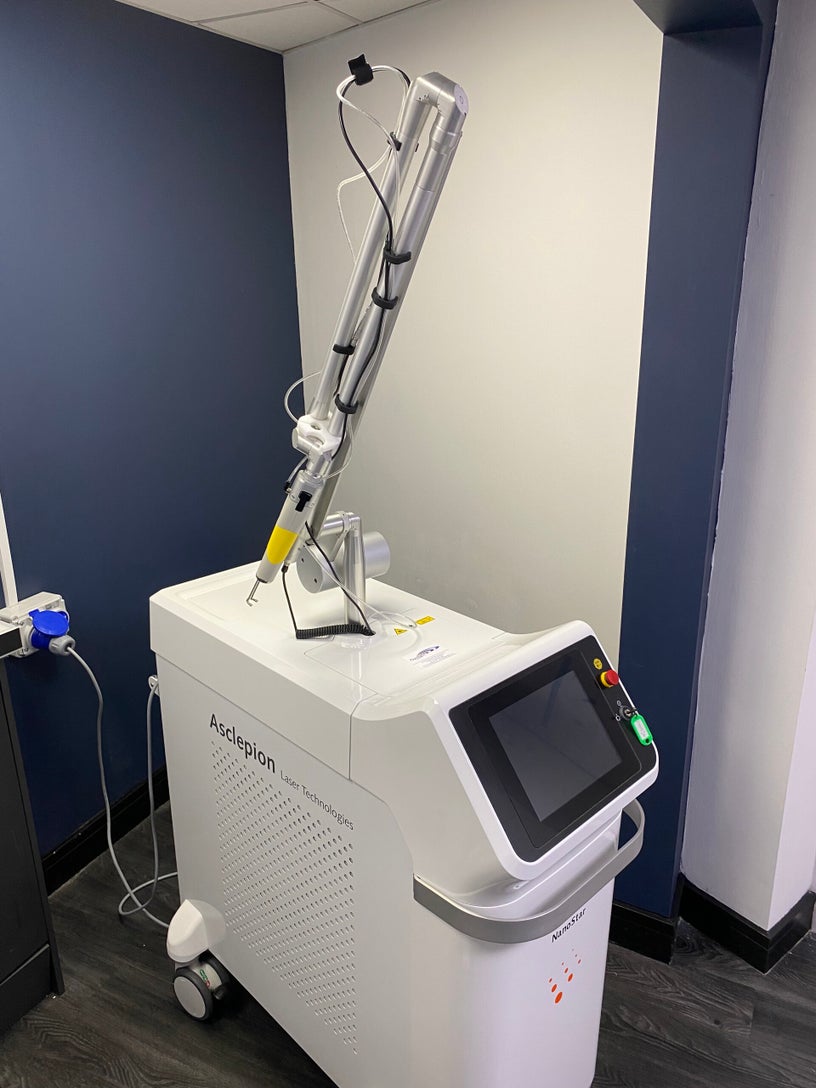
Pulsar performs selected microblading removal using the Asclepion NanoStar Y active Q-switched nanosecond laser at its Chorley clinic.
Start with an individual assessment
Send clear, makeup-free photographs in natural light or book a consultation so we can assess the colour, depth, top-ups, skin condition and safest removal pathway.
Sources and further reading
This guide provides general information and does not replace an individual consultation, patch test or medical advice. Further reading: Laser Removal of Eyeliner and Eyebrow Tattoos: Experiences and Learnings; Lasers for the Treatment of Eyebrow Microblading and Cosmetic Tattoo Pigment: A Review; U.S. FDA — Tattoo Removal: Options and Results; U.S. FDA — Tattoos and Permanent Makeup Fact Sheet; North Bristol NHS Trust — Tattoo Laser Treatment.