

Pale Pigment May Resist
White, beige and flesh-toned pigments may absorb available tattoo-removal wavelengths poorly.
Pulsar Laser Studio · Cosmetic pigment guide
White, beige and flesh-toned permanent makeup can be difficult and unpredictable to remove. This guide explains why pale pigment may resist laser treatment, why it can darken and why a cautious patch test is essential.
Jump to a section
The honest answer
White cosmetic pigment is one of the most unpredictable tattoo colours to treat. It may show little useful response, or it may become darker after exposure to laser energy.
This darkening is sometimes called paradoxical darkening. The treated pigment may appear grey, blue-grey, violet-grey or black instead of becoming lighter.
In some cases newly darkened pigment may provide a target for further treatment, but this is not reliable and complete reversal cannot be promised.
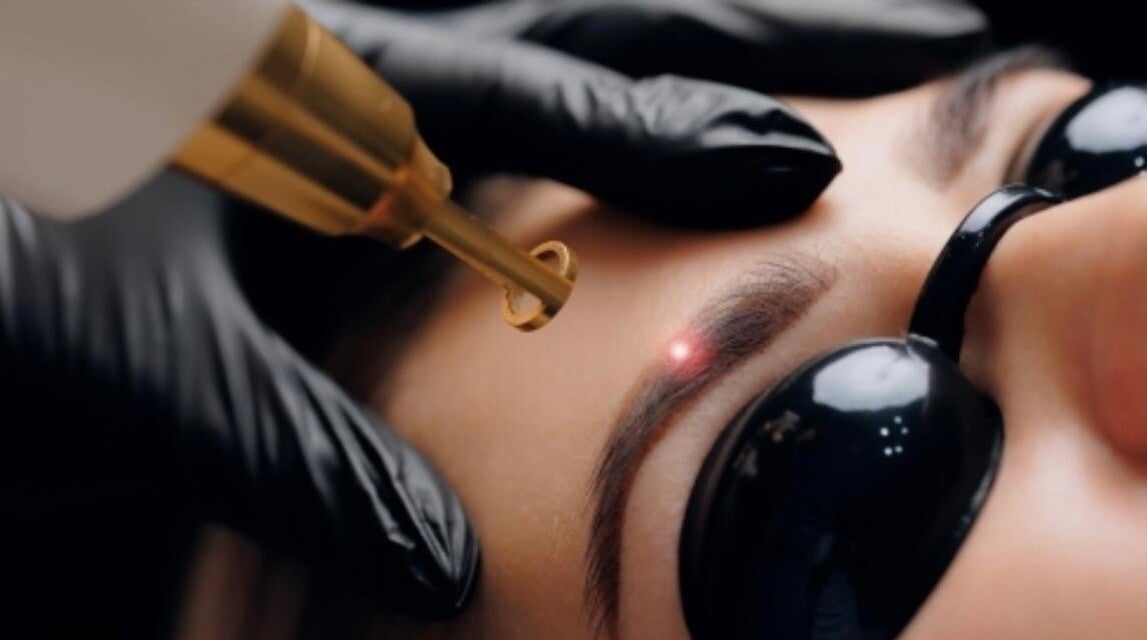
White, beige and flesh-toned pigments may absorb available tattoo-removal wavelengths poorly.
Some pigment ingredients can change chemically after laser exposure and become much darker.
A small test reduces uncertainty before a larger cosmetic area is exposed.
A patch test must be allowed to heal fully before deciding whether further treatment is appropriate. No clinic should promise that darkened cosmetic pigment can always be removed.
White may be hidden inside another colour
White pigment is not limited to a visibly white tattoo. It may be blended into cosmetic colours to make them lighter, softer, more opaque or closer to a natural skin tone.
Skin-coloured pigment may be placed over unwanted PMU, scars or migrated pigment in an attempt to conceal it.
Beige or nude pigment may be used to reshape an eyebrow or hide sections outside a new outline.
Blonde, taupe and pale-brown brow pigments may contain white to alter opacity and brightness.
Nude, pale pink and lip-neutralising pigments can contain white or other lightening ingredients.
White or cream pigment may be placed around brows, lips or eyeliner as a cosmetic highlight.
Medical or paramedical tattooing may use several skin-tone pigments containing pale components.
White, yellow, beige or flesh tones may be added over a dark, blue, grey or uneven cosmetic tattoo.
Clients may not know that white is present because the final implanted colour appeared brown, pink or nude.
A pigment does not need to look white to carry a darkening risk. Beige, flesh-toned, pastel and corrected cosmetic tattoos may contain pale components that are not obvious from the surface.
The laser needs a suitable optical target
Laser tattoo removal depends on the pigment absorbing a suitable wavelength strongly enough to fragment while unnecessary injury to the surrounding skin is limited.
White pigment reflects much of the visible light that reaches it and may provide a weak laser target.
Pale pigment can closely resemble the surrounding skin, making treatment endpoints and small changes difficult to judge.
White may be blended with red, yellow, beige, brown or iron-containing ingredients that react differently.
Some pigments become darker rather than lighter after exposure to a short laser pulse.
Camouflage pigment may sit over an older tattoo, meaning several colours and depths must be considered.
The exact pigment brand, batch and ingredient list may be unavailable or may not predict the clinical response.
Laser, saline, acids or repeated tattooing may have altered both the pigment and the skin.
The skin may show inflammation or pigment change without a useful reduction in the cosmetic tattoo.
Increasing fluence or repeatedly passing over resistant pale pigment may increase burns, scarring, skin-colour change and hair damage without producing proportional clearance.
Paradoxical darkening explained
Some cosmetic pigments contain compounds that can change chemical state when exposed to intense short-pulsed laser energy. This may alter the way the pigment reflects and absorbs light.
Titanium dioxide is commonly associated with white opacity, while iron oxides may be used in cosmetic colour mixtures. Laser exposure has been linked with darkening of some pigments containing these compounds.
The pigment may appear white, cream, nude, beige, pale pink or close to the surrounding skin tone.
The test area may become grey, blue-grey, violet-grey, brown-black or black.
The colour may soften, remain dark or prove resistant. The healed result determines whether any further treatment is reasonable.
Colour unmasking and paradoxical darkening are not the same. Colour unmasking reveals another pigment already present in a blend. Paradoxical darkening is a chemical change in the treated pigment.
Darkening an entire pale cosmetic tattoo in the hope of removing it later is unpredictable and may leave a more visible tattoo that cannot be cleared completely.
Not every pale pigment is the same
| Visible pigment | What it may contain | General concern |
|---|---|---|
| Pure-looking white | A high proportion of white opacifying pigment, sometimes including titanium dioxide. | Poor laser absorption and a recognised risk of darkening. |
| Cream or ivory | White blended with yellow, beige or warm components. | The mixture may darken or reveal a warmer residual colour. |
| Beige or nude | White mixed with yellow, red, brown and skin-tone ingredients. | The surface colour does not identify which component will respond first. |
| Flesh-toned camouflage | A blend intended to resemble the client’s skin colour. | Darkening can make the camouflage tattoo much more visible. |
| Pale pink | Red or pink pigment diluted with white. | The red component and white component may respond differently. |
| Pale yellow or peach | Yellow, orange or red blended with white or beige. | Weak absorption, colour unmasking and darkening are all possible. |
| Light taupe or blonde brow | Brown, yellow, grey and white components in varying proportions. | Removing darker material may reveal yellow or pale residual pigment. |
Photographs cannot confirm the pigment formula. Clear makeup-free images are useful for initial screening, but an in-person consultation and healed patch test remain necessary.
Test a small area first
A patch test does not eliminate risk, but it can reveal a dangerous or unsuitable response before an entire eyebrow, lip border or camouflage area is treated.
Frosting, redness, swelling and temporary colour change can hide the true response. The patch must heal before deciding whether to treat a larger area.
What happens if the test turns dark?
Sometimes newly darkened pigment absorbs a wavelength used for darker tattoo colours and may be considered for further cautious treatment after full healing.
However, published experience shows that responses vary. Some darkened tattoos have improved with additional treatment, while others have remained resistant and required a different approach.
Do not immediately retreat a darkened test spot. Inflammation and colour must settle first.
Clear photographs help compare the original colour, immediate reaction and healed result.
The healed dark colour, depth, skin response and surrounding pigment must be reviewed.
Another cautious test may be considered, but success cannot be assumed.
A small darkened patch does not prove that the entire cosmetic tattoo can be safely cleared.
Resistant pigment may require another laser opinion or a non-pigment-selective medical approach.
Repeated aggressive treatment can create permanent texture or skin-colour change.
Stopping may be the responsible decision when further treatment is unlikely to improve the result.
The newly dark colour may remain resistant. A practitioner should never promise that intentionally darkening pale pigment creates a predictable removal pathway.
Possible treatment pathways
A small test may be considered where the client understands the possibility of permanent darkening.
Selected darkened pigment may be reassessed as a new target, but successful clearance is not guaranteed.
The healed result should be reviewed after an adequate interval rather than judging the immediate appearance.
A trained saline practitioner may assess a separate invasive removal pathway, with its own risks and limitations.
A medical laser specialist may assess whether a non-pigment-selective approach is appropriate for selected resistant cosmetic tattoos.
Once fully healed, a qualified PMU artist may assess whether fading is sufficient for correction or redesign.
Makeup may reduce visibility once the skin has completely healed, but it should not be used on broken or irritated skin.
Observation may be the safest option where the colour is faint or treatment risk is disproportionate.
No removal method guarantees complete clearance. Laser, saline and ablative pathways all carry risks, and repeated trauma can increase the chance of permanent scarring.
A responsible endpoint
The patch becomes substantially darker and there is no clear, evidence-based next step offering an acceptable risk.
The healed test or previous session shows little improvement despite a visible skin reaction.
Blistering, prolonged redness, skin-colour change or delayed healing occurs without meaningful fading.
Further treatment may offer little cosmetic improvement compared with the risk of a more visible complication.
The available wavelengths do not provide a useful and safe pathway for the remaining pigment.
Existing texture, repeated procedures or poor healing make further laser inappropriate.
A safe endpoint may be partial fading or leaving pale residual pigment. Protecting facial skin is more important than attempting complete removal at any cost.
Balanced information
Existing scar tissue may already be present. Repeated tattooing, camouflage work, saline removal and previous laser treatment can alter the skin before a new assessment begins.
Supporting recovery
Always follow the individual instructions provided at your appointment. The guidance below is general and does not replace advice based on your own response.
Seek advice for increasing pain, spreading redness, increasing heat, pus, fever, significant swelling, eye symptoms, extensive blistering, delayed healing or any reaction that concerns you.
Your treatment journey
Natural-light photographs help us understand whether the pigment appears white, cream, beige, nude, pale pink or flesh-toned.
We review pigment history, correction layers, previous removal, skin type, scarring, medication and your treatment goal.
You must understand that the test area may become substantially darker and that reversal cannot be guaranteed.
A small section is tested for lightening, no response, colour unmasking, darkening and skin reaction.
The immediate colour is not the final result. The patch must settle before another decision is made.
We assess whether the pigment response justifies further laser or whether another pathway is more appropriate.
The plan may involve another small test, specialist referral, saline assessment, future redesign or leaving the pigment untreated.
Continue learning
Eyebrows, eyeliner, colour changes, saline, sessions, risks, aftercare and realistic expectations.
Read the cornerstone guide →How suitable laser energy fragments cosmetic pigment and why treatment is often staged.
Read the laser guide →Why mixed cosmetic pigment reveals warmer colours as darker components reduce.
Read the colour-change guide →Why yellow can remain after warmer colours reduce and when further laser should stop.
Read the yellow pigment guide →How colour, layering, technique, previous treatment and the final goal affect the course.
Supporting article coming soonHow a small test can reveal colour unmasking, darkening and skin response.
Supporting article coming soonFrequently asked questions
Complete removal cannot be guaranteed. White pigment may resist laser treatment or darken instead of becoming lighter.
Some pigment compounds can undergo a chemical colour change after short-pulsed laser exposure, altering from a pale colour to grey, blue-grey, violet-grey or black.
Paradoxical darkening is an unexpected chemical colour change in which a pale cosmetic pigment becomes darker after laser exposure.
No. Colour unmasking reveals another colour already present in a blended pigment. Paradoxical darkening changes the pigment itself.
Beige, nude, flesh-toned, pastel pink, light yellow, cream, blonde, taupe and camouflage pigments may all contain white or pale opacifying ingredients.
Yes. White or beige may have been used within the original pigment blend or added later as a colour corrector or camouflage layer.
It may provide useful clues, but it cannot guarantee the clinical response because pigment mixtures, depth, layering, batch variation and previous treatments also matter.
A patch test can show whether the pigment lightens, remains unchanged, reveals another colour, darkens or causes an unsuitable skin response.
Yes. Different sections may contain different pigment mixtures, depths, correction layers and scar tissue.
It may be immediate, but the final appearance should still be assessed after the skin has healed and inflammation has settled.
Some immediate colour may soften as the reaction settles, but true chemically darkened pigment can persist.
Selected newly darkened pigment may be assessed as a darker target, but response is unpredictable and complete removal cannot be promised.
No. Intentionally darkening an entire pale cosmetic tattoo is unpredictable and may create a more visible pigment that remains resistant.
Not safely or reliably. More energy can increase burns, skin-colour changes, scarring and hair damage without ensuring useful clearance.
Saline may be assessed as a separate invasive pathway by a trained practitioner, but it also carries risks and cannot guarantee complete removal.
A staged plan may occasionally be considered, but the skin must fully heal between procedures. Repeated trauma can increase scarring risk.
Possibly, once the skin is fully healed and stable. A qualified PMU artist must assess the colour, texture and suitability for redesign.
Treatment should stop when pigment darkens unpredictably, shows no useful response, skin risk increases or no appropriate laser target remains.
Temporary hair lightening or shedding can occur, and permanent hair reduction is a recognised risk.
Yes. Scarring is a recognised risk, particularly when resistant pigment is treated aggressively or healing skin is disturbed.
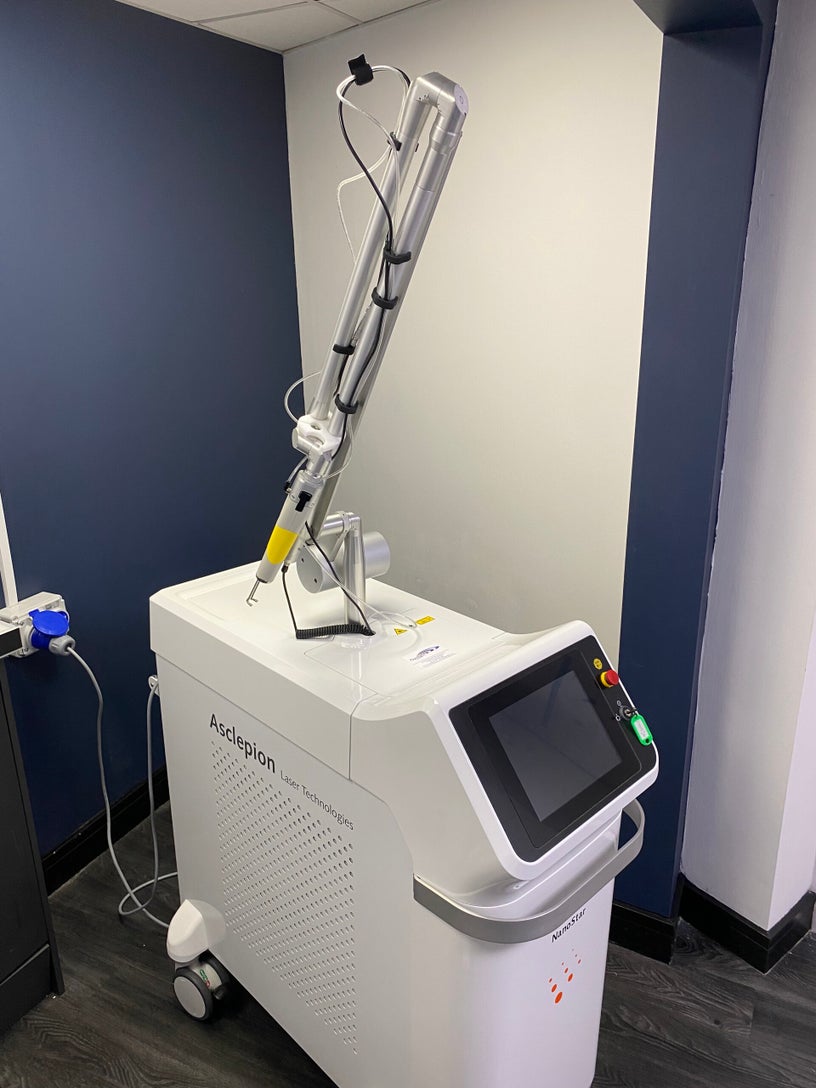
Pulsar assesses selected permanent makeup removal cases using the Asclepion NanoStar Y active Q-switched nanosecond laser at its Chorley clinic.
Start with an individual assessment
Send clear, makeup-free photographs in natural light or book a consultation so we can assess the visible colour, correction history, skin condition and whether a cautious patch test is appropriate.
Sources and further reading
This guide provides general information and does not replace an individual consultation, patch test or medical advice. Further reading: U.S. FDA — Tattoo Removal: Options and Results; U.S. FDA — Tattoos and Permanent Make-up; Laser Removal of Eyeliner and Eyebrow Tattoos: Experiences and Learnings; Laser Tattoo Removal: A Clinical Update; Complications of Tattoos and Tattoo Removal; Tattoo Darkening and Nonresponse: Possible Role of Titanium Dioxide; Cosmetic Tattoo Ink Darkening After Laser Treatment.