

Temporary Whitening
The visible hair shaft may appear white, blonde, grey or coppery immediately after treatment.
Pulsar Laser Studio · Eyebrow removal guide
Laser eyebrow tattoo removal targets cosmetic pigment rather than being performed as a hair-removal treatment. However, natural brow hairs can temporarily whiten, singe, break or shed, and permanent density reduction remains a recognised risk.
Jump to a section
The honest answer
Yes, it can. The laser is selected to target tattoo pigment, not to perform laser hair removal, but the pulse still passes through an area containing natural eyebrow hairs.
The most noticeable effects are often temporary whitening, lightening, singeing or breakage of the visible hair. Some clients may also experience temporary shedding.
Permanent thinning or loss is less common, but it is a recognised possibility if the follicle is injured, particularly where treatment causes excessive heat, burns, scarring or repeated trauma.
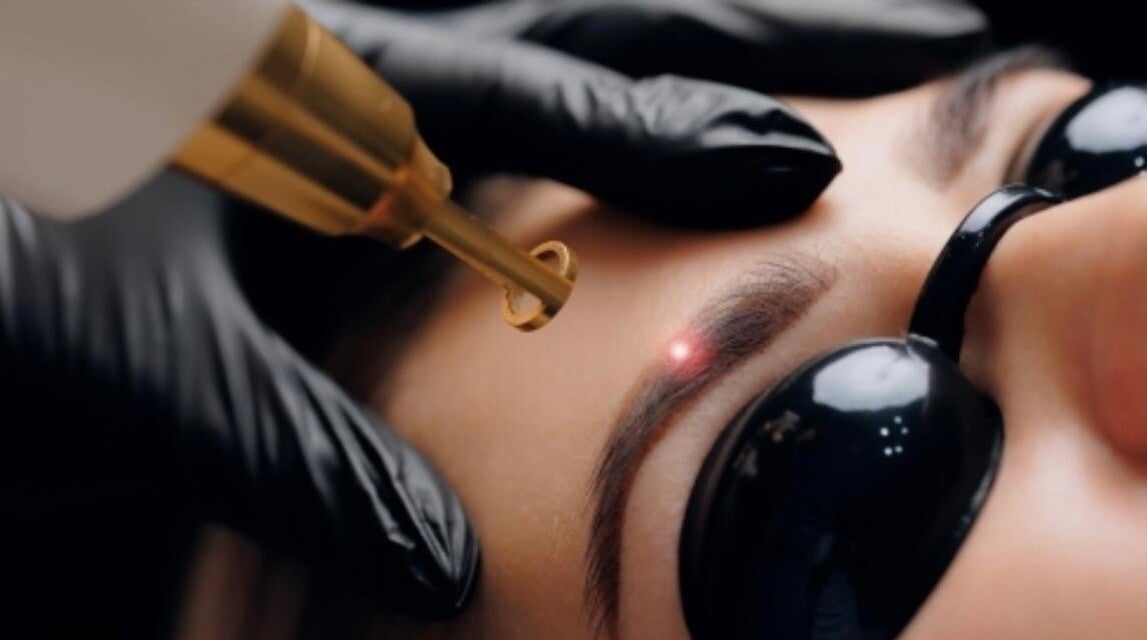
The visible hair shaft may appear white, blonde, grey or coppery immediately after treatment.
Some hairs may break or shed during the following days or weeks and may regrow over time.
Lasting density loss can occur if follicles are damaged and must be included in informed consent.
White hair does not automatically mean permanent hair loss. A pale hair shaft can remain attached and continue growing while the follicle remains active.
What clients may notice
Dark hairs may immediately appear white, blonde, silver, grey or lighter than before.
The exposed hair can become curled, rough, brittle or shortened following the pulse.
A weakened shaft may snap close to the skin even when the follicle remains intact.
Some hairs may loosen and fall during the following days or weeks.
Whitening, breakage and normal growth cycles can temporarily make density look uneven.
Eyebrow hairs grow slowly, so visible recovery may take weeks or several months.
A small reduction in density may remain where follicles do not recover completely.
Permanent loss is possible if follicles are sufficiently injured or replaced by scar tissue.
The aim is to minimise avoidable damage through correct assessment, appropriate settings, controlled treatment and adequate healing intervals, but the risk cannot be removed completely.
A common immediate change
Melanin is the natural pigment that gives eyebrow hair much of its colour. Short-pulsed laser energy delivered through the brow can interact with pigment in exposed hairs as well as the cosmetic tattoo beneath them.
This can alter the appearance of the visible hair shaft, making it look white, silver, blonde, grey, reddish or coppery. The effect may be more noticeable in naturally dark, coarse hairs.
Hair colour may change during the appointment and become visible as soon as the area is cleaned.
The exposed length may lighten while new growth emerging later retains the natural colour.
A white hair can remain firmly within the follicle and continue to grow.
The treated section may remain pale until it is trimmed, sheds naturally or grows out.
Temporary whitening is different from permanent follicle destruction. The appearance of the shaft alone cannot confirm whether a follicle has been damaged.
Understanding the difference
| Hair structure | Possible laser effect | What it may mean |
|---|---|---|
| Visible hair shaft | Whitening, singeing, curling, brittleness or breakage. | The exposed hair may look damaged even when the follicle remains capable of producing new hair. |
| Hair below the skin | Temporary heat or inflammatory stress. | The hair may shed later and regrowth may be delayed. |
| Hair follicle | Temporary disturbance or, less commonly, structural injury. | Temporary shedding may recover; significant injury can produce persistent thinning. |
| Surrounding skin | Redness, swelling, blistering, pigment change or scarring. | Scarring around a follicle can interfere with future hair production. |
| Normal growth cycle | Hairs are naturally at different stages when treatment occurs. | Some hairs may shed while others remain, creating a temporarily uneven appearance. |
Whitening, swelling, shortened hairs and temporary shedding can make the brows appear much thinner before the skin settles and the growth cycle becomes clear.
Temporary loss can occur
Hair may disappear for different reasons. The visible shaft may snap because it was singed or made brittle, or the follicle may temporarily release a hair after heat and inflammation.
The shaft snaps near the skin but the follicle remains underneath.
Inflammation may disturb the normal cycle and cause a hair to shed later.
Hair can become caught within crusting and shed if the area is rubbed or picked.
Scratching, brushing, waxing or removing crusts can pull healing hairs from the area.
A small amount of shedding may look more dramatic where density was already limited.
Repeated tattooing or saline removal may already have affected skin and follicles.
Some hairs would have shed naturally during the same period even without laser.
More significant thermal or scar-related injury can produce longer-lasting reduction.
Do not pull at pale or curled hairs. Leaving them undisturbed reduces unnecessary mechanical trauma while the skin heals.
A recognised but unintended risk
Permanent eyebrow-hair reduction is possible, although it is not the intended outcome. Published clinical experience includes treatment series without documented hair-loss complications and individual cases reporting reduced eyebrow density.
The risk is most concerning when follicles are exposed to excessive tissue injury, burns, prolonged inflammation or scarring. A follicle replaced or surrounded by scar tissue may not produce normal regrowth.
Whitening, breakage or shedding improves as hairs grow out or re-enter the cycle.
Some density returns over time, but the brow may remain slightly thinner.
Follicle damage or scarring leaves an area with lasting reduction in growth.
Even where hair effects appear temporary, the final density may take months to assess. Clients should understand the possibility of incomplete recovery before treatment.
Why the risk differs between clients
| Factor | Why it matters | Clinical consideration |
|---|---|---|
| Laser wavelength | Different wavelengths interact differently with tattoo pigment, skin melanin and hair melanin. | No wavelength guarantees complete hair protection. |
| Fluence and pulse delivery | More energy can increase the effect reaching pigment and surrounding structures. | Settings should be based on the pigment and skin response. |
| Overlap and repeat exposure | Excessive overlap or repeated passes can increase cumulative tissue stress. | Treatment should avoid unnecessary exposure. |
| Hair colour and thickness | Dark, coarse hairs may show more obvious lightening or singeing. | Immediate whitening does not prove permanent loss. |
| Pigment density | Dense cosmetic tattooing may require more sessions. | A longer course creates repeated exposure over hair-bearing skin. |
| Skin reaction | Burns, extensive blistering and prolonged inflammation can threaten follicles. | Healing must be reviewed before further treatment. |
| Existing scar tissue | Microblading, machine passes and previous removal may already have damaged follicles. | Pre-existing density and texture should be documented. |
| Healing intervals | Retreating incompletely recovered skin increases cumulative injury. | Sessions should not be rushed. |
| Aftercare | Picking, rubbing and early brow procedures add trauma. | Avoid disturbing the treated area. |
| Individual response | Inflammation and follicle sensitivity vary. | A patch test reduces uncertainty but cannot eliminate risk. |
Repeatedly escalating energy to chase resistant pigment can increase burns, scarring and hair loss without a proportional improvement in tattoo removal.
Recovery takes time
Eyebrow hair grows more slowly and has a shorter active growth phase than scalp hair. Not every follicle is producing a visible hair at the same time.
Whitening, singeing, swelling and shortened hairs may make the brows look sparse.
Some brittle hairs may shed, while existing hairs continue to grow slowly.
New growth may become visible as follicles progress through their normal cycle.
Persistent gaps or density reduction should be assessed after sufficient time.
Regrowth cannot be judged accurately after only a few days. Temporary loss may take several weeks or months to improve, and recovery may be uneven.
Products such as minoxidil are not automatically appropriate around recently treated facial skin or near the eyes. Persistent loss should be discussed with a qualified medical professional.
Small-area information before full treatment
A patch test can show how a small section of tattoo pigment, skin and natural hair responds. It is useful, but it cannot guarantee that the entire brow will behave identically.
Document the natural brow before treatment. Clear makeup-free photographs help distinguish pre-existing gaps, old scar tissue and changes during the removal course.
Protecting skin and hair during healing
Always follow the individual instructions provided at your appointment. The guidance below is general and does not replace advice based on your response.
Tint, dye and other brow chemicals can irritate treated skin. Wait until the area is fully recovered and the clinic confirms tinting is appropriate.
When the reaction needs review
Increasing pain, spreading redness, heat, pus, fever or delayed healing requires advice.
Large or worsening blisters should be reviewed rather than deliberately burst.
A large patch of shedding or rapidly reducing density should be documented.
A gap not showing recovery over time may require longer-term review.
A shiny, raised, indented or firm area should be assessed before another session.
Eye pain, visual change or severe swelling requires urgent professional assessment.
Further treatment should not proceed until the previous reaction is reviewed.
Contact the clinic rather than attempting early correction on healing skin.
Where hair or skin effects are disproportionate to pigment improvement, the settings, interval, area or treatment endpoint may need to change.
Your treatment journey
Makeup-free photographs record existing density, gaps, scars and hair colour.
We assess pigment colour, technique, top-ups, previous removal and existing follicle damage.
Temporary whitening, breakage, shedding and possible permanent reduction are explained.
A small section is tested for pigment response, skin reaction and visible hair effects.
The patch is reviewed after swelling and inflammation settle.
The full area is treated only when the likely benefit remains proportionate to risk.
Future settings and intervals consider both tattoo fading and natural brow condition.
Treatment is reconsidered if hair loss, skin injury or scarring becomes disproportionate.
Continue learning
Eyebrows, eyeliner, colour changes, saline, sessions, risks and aftercare.
Read the cornerstone guide →How suitable laser energy fragments cosmetic pigment and why treatment is staged.
Read the laser guide →What affects treatment length and why the course may change.
Read the session guide →Why mixed cosmetic pigment reveals warmer colours.
Read the colour-change guide →Why yellow can remain and when further laser should stop.
Read the yellow pigment guide →Why white, beige and flesh-toned pigment may resist or darken.
Read the white pigment guide →Frequently asked questions
It is not intended as hair removal, but natural brow hairs can whiten, singe, break or shed. Permanent density reduction is possible.
The pulse can alter pigment within the exposed shaft, making dark hairs look white, blonde, grey or coppery.
No. A white hair may remain attached and continue growing. Whitening does not by itself prove permanent follicle damage.
The treated part may remain pale until it grows out, is trimmed or sheds. New growth may return in the natural colour if the follicle remains healthy.
Not while the skin is healing. Wait until redness, blistering, crusting and irritation have fully resolved.
No. Pulling hairs from recently treated skin can add unnecessary trauma.
Yes. Exposed shafts can become curled, shortened, rough or brittle without necessarily causing permanent follicle injury.
Yes. Brittle shafts may break and temporarily stressed follicles may release hairs during the following days or weeks.
The timing varies. Eyebrow growth is slow, and visible recovery may take several weeks or months.
No guarantee can be given. Many temporary changes improve, but partial or permanent reduction is possible.
Yes. It is a recognised risk, particularly where follicles are injured by excessive heat, burns, scarring or repeated aggressive treatment.
Evidence is limited. Some treatment series report no hair-loss complications, while individual cases report reduced density. It should be discussed as possible rather than inevitable.
No wavelength guarantees complete protection. Risk depends on wavelength, settings, hair colour, pigment, technique, overlap and individual response.
Shorter wavelengths interact more strongly with melanin, so careful assessment is important. Actual risk depends on the full treatment parameters.
Shaving removes visible hair above the skin but does not shield the follicle. Only shave if specifically advised.
No. It provides information about a small section but cannot guarantee that the whole brow or later sessions will respond identically.
Repeated exposure, short intervals or excessive tissue reactions can increase cumulative stress to the skin and follicles.
Yes. If follicles are destroyed or replaced by scar tissue, permanent reduction may result.
Do not apply hair-growth medication to recently treated skin without medical advice, particularly near the eyes.
Do not apply makeup over broken, blistered, crusted or irritated skin. Once healed, temporary products may be suitable.
Not while healing. Wait until the area has fully recovered and the clinic confirms it is suitable.
The reaction should be reviewed before another session. The settings, interval, area or endpoint may need to change.
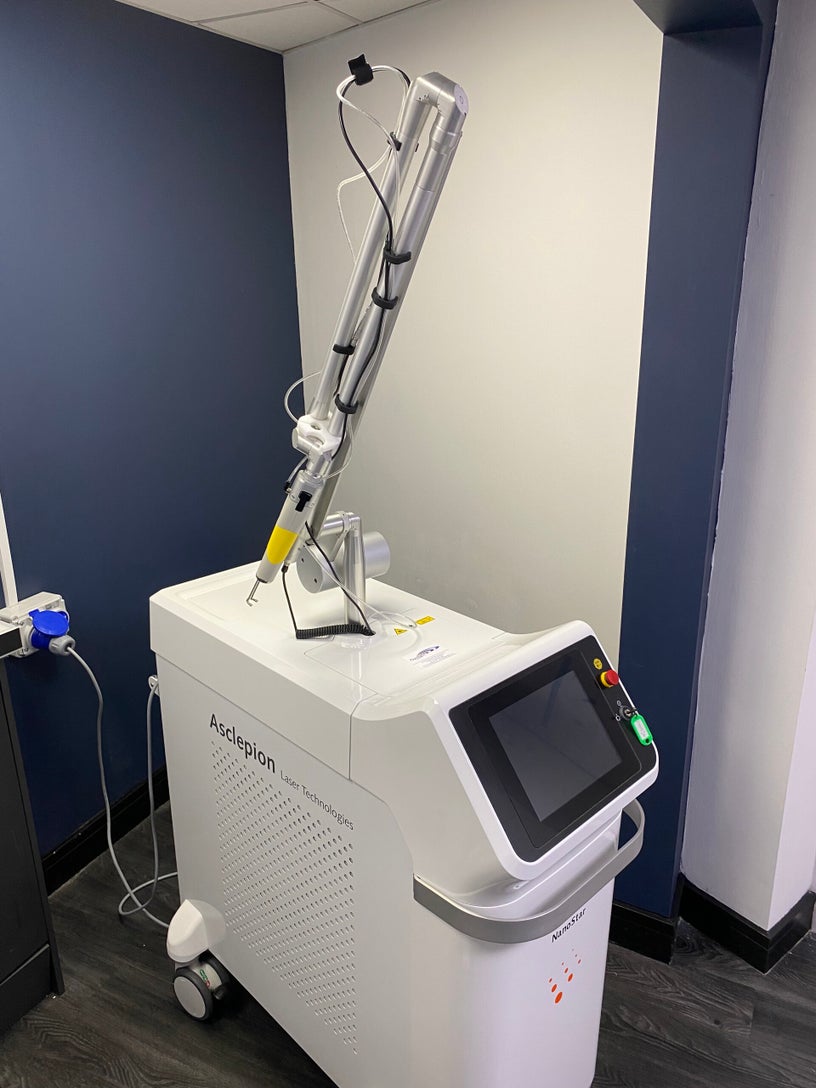
Pulsar performs selected eyebrow tattoo removal using the Asclepion NanoStar Y active Q-switched nanosecond laser at its Chorley clinic.
Start with an individual assessment
Send clear, makeup-free photographs in natural light or book a consultation so we can assess natural brow density, cosmetic pigment, skin condition, previous treatments and the safest removal pathway.
Sources and further reading
This guide provides general information and does not replace an individual consultation, patch test or medical advice. Further reading: Laser Removal of Eyeliner and Eyebrow Tattoos: Chart Review, Experiences and Learnings; Cosmetic Eyebrow Tattoo Removal Using a Q-Switched Ruby Laser: A Case Report; Lasers for the Treatment of Eyebrow Microblading and Cosmetic Tattoo Pigment: A Review; U.S. FDA — Tattoo Removal: Options and Results; U.S. FDA — Tattoos and Permanent Makeup Fact Sheet.