

Yellow May Respond Poorly
Visible yellow often absorbs tattoo-removal laser energy less efficiently than black, dark brown or selected red pigment.
Pulsar Laser Studio · Cosmetic pigment guide
Yellow can be one of the most difficult permanent-makeup colours to treat. This guide explains why it may appear, why it often resists laser treatment, what a patch test can show and when the safest decision may be to stop.
Jump to a section
The honest answer
Sometimes yellow eyebrow pigment may soften, but yellow is often one of the least predictable cosmetic colours to treat.
The challenge is that many yellow pigments absorb available tattoo-removal wavelengths poorly. The laser may create a skin reaction without producing a useful reduction in the remaining yellow colour.
For that reason, treatment must be guided by consultation, skin type, previous response and a cautious patch test rather than by increasing energy repeatedly.
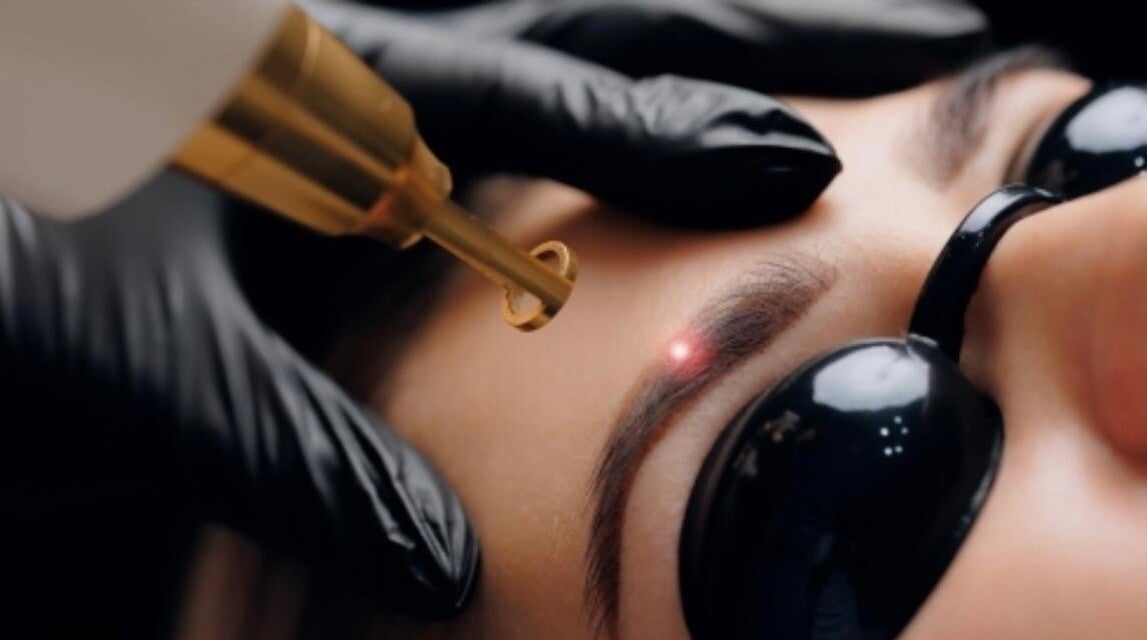
Visible yellow often absorbs tattoo-removal laser energy less efficiently than black, dark brown or selected red pigment.
A small test can show whether the colour softens, remains unchanged, darkens or creates an unsuitable skin response.
Further laser should not continue when risk increases but meaningful pigment reduction does not.
Complete removal cannot be promised. A realistic result may be partial softening, reduced contrast or stopping with residual yellow pigment when no suitable laser target remains.
Colour unmasking
Most natural-looking eyebrow pigments are mixtures rather than one pure colour. Brown, taupe and dark-blonde pigments may contain black, red, orange, yellow and white ingredients.
When a laser reduces the darker or redder components first, yellow that was already part of the original blend can become more visible. The laser has not necessarily created a new yellow pigment; it may have uncovered a colour that was previously hidden.
Black or dark-brown components dominate the appearance before treatment.
Red, pink or orange becomes visible after the darker component reduces.
Yellow may remain after red and orange components have softened further.
The remaining colour may no longer absorb the available laser wavelength adequately.
Frosting, swelling, inflammation and temporary pigment change can make the brow look brighter, paler or more yellow on the day. The healed result should guide the next decision.
The laser needs a suitable target
Laser tattoo removal relies on pigment absorbing enough energy to fragment while the surrounding skin remains protected. Yellow often provides a weaker optical target than darker pigment.
Some yellow pigments absorb the available tattoo-removal wavelengths poorly, so useful fragmentation may be limited.
Pale yellow may have little visual contrast against the surrounding skin, making treatment endpoints harder to judge.
What looks yellow may include white, beige, orange, iron-based or flesh-toned ingredients that behave differently.
Shorter wavelengths can also interact with skin melanin, particularly in tanned or more pigmented skin.
Repeated top-ups and colour corrections may place yellow at different depths and alongside other colours.
Earlier laser, saline or chemical procedures may have changed pigment chemistry and skin texture.
Yellow mixed with white or beige can become resistant or may darken unexpectedly after laser exposure.
The skin may show increasing inflammation before the pigment shows meaningful fading.
Once a suitable endpoint has been reached, increasing fluence or repeating passes can increase burns, pigment change, scarring and brow-hair damage without producing proportional pigment clearance.
Not every yellow is the same
The visible shade provides clues, but it does not confirm the pigment formula. Two brows that both appear yellow may respond very differently.
| Visible appearance | What it may contain | General consideration |
|---|---|---|
| Bright warm yellow | A stronger yellow component remaining after red or orange has reduced. | May be considered for cautious testing, but response remains uncertain. |
| Pale yellow | A low concentration of yellow, pigment mixed with white or very superficial residual colour. | Low contrast and poor absorption may make further laser of limited value. |
| Yellow-orange | A mixture containing both red and yellow components. | A warm-pigment wavelength may affect part of the mixture, with yellow remaining afterwards. |
| Yellow-brown | Residual dark pigment mixed with warm yellow or orange. | The darker component may still respond before the final yellow stage appears. |
| Mustard or olive tone | Yellow mixed with grey, green, black or colour-correcting pigment. | The visible tone may not identify one clear wavelength target. |
| Yellow-beige or flesh tone | Yellow combined with white, beige or camouflage pigment. | Unexpected darkening is a particular concern and patch testing is essential. |
Photographs are useful but cannot confirm pigment chemistry. Makeup-free images in natural light help with initial assessment, but treatment decisions still require an in-person consultation and patch test.
Wavelength selection
A 532 nm wavelength is commonly associated with selected warm tattoo pigments, particularly red and some orange tones. However, visible yellow does not automatically mean it will absorb 532 nm well enough to produce useful clearance.
The practitioner must consider the precise visible tone, skin type, recent tanning, pigment depth, previous response and whether white or flesh-toned ingredients may be present.
May provide a clearer warm-pigment target where the skin and patch-test response are suitable.
The orange component may respond more than the yellow component, leaving a paler residual colour.
May absorb inadequately, meaning the skin reacts but the pigment changes very little.
Surrounding melanin can also absorb shorter-wavelength energy. Recently tanned or sun-exposed skin can increase the risk of burns and unwanted lightening or darkening.
Test before treating a larger area
A patch test helps determine whether the remaining colour provides a useful laser target and whether the surrounding skin tolerates the proposed approach.
A yellow patch can look brighter, paler or darker on the day because of frosting and inflammation. It must heal fully before a larger treatment decision is made.
Possible next steps
A cautious test may be considered when the colour, skin type and previous response suggest there may still be a suitable target.
Residual pigment can continue to soften after the surface looks healed, so review should not be rushed.
Temporary brow products may reduce the visibility of pale residual colour once the skin has fully healed.
A qualified PMU artist may assess whether sufficient fading has been achieved for a new shape or colour correction.
A trained saline practitioner may consider an invasive removal pathway, although results and complete clearance are not guaranteed.
Stopping can be appropriate where the remaining yellow is faint and further treatment would create disproportionate risk.
A specialist with a different genuine wavelength may assess whether another technology offers a suitable target.
Unexpected inflammation, persistent skin change or suspected allergic response may require medical assessment.
No method guarantees complete removal. Laser, saline and future colour correction all have limitations, and repeatedly traumatising the same brow can increase scarring risk.
A responsible endpoint
Continuing treatment is not always the best or safest choice. The decision should be based on benefit versus risk rather than a desire to keep increasing the visible reaction.
The healed patch or previous session shows little or no reduction in the yellow colour.
Redness, blistering, pigment change or delayed healing increases while the yellow remains unchanged.
Grey, blue-grey or black change suggests the chemistry may be unsuitable for routine continuation.
Further treatment may offer little cosmetic improvement compared with the risk to the skin and brow hair.
The remaining colour falls outside the useful treatment range of the available device.
Existing texture, repeated trauma or poor healing makes further laser inappropriate.
A safe endpoint may be substantial fading with a small amount of residual yellow. Protecting the skin is more important than pursuing complete clearance at any cost.
Balanced information
Yellow-pigment treatment is not risk-free. The weaker the pigment target, the more important it becomes to avoid repeatedly escalating treatment simply because the colour remains visible.
Existing scar tissue may already be present. Repeated microblading, machine work, correction and previous removal procedures can alter the skin before further laser is considered.
Supporting recovery
Always follow the individual advice provided at your appointment. The guidance below is general and does not replace instructions based on your own response.
Seek advice for increasing pain, spreading redness, increasing heat, pus, fever, significant swelling, eye symptoms, extensive blistering, delayed healing or any reaction that concerns you.
Your treatment journey
Natural-light photographs help us understand whether the colour appears yellow, yellow-orange, yellow-brown, beige or mixed.
We review pigment history, previous treatments, skin type, tanning, scarring, medication and your treatment goal.
A small section is tested to assess useful softening, no response, darkening and the surrounding skin reaction.
The immediate colour is not the final result. The patch must settle before any wider treatment is considered.
We assess whether the pigment changed enough to justify further laser treatment.
The plan may involve another cautious session, a different specialist opinion, saline assessment, future brow redesign or leaving faint residual colour.
Continue learning
Eyebrows, eyeliner, colour changes, saline, sessions, risks, aftercare and realistic expectations.
Read the cornerstone guide →How suitable laser energy fragments cosmetic pigment and why treatment is often staged.
Read the laser guide →Why mixed cosmetic pigment reveals warmer colours as darker components reduce.
Read the colour-change guide →Why white, beige and flesh-toned pigments can resist treatment or darken.
Read the white pigment guide →How colour, layering, technique, previous treatment and the final goal affect the course.
Supporting article coming soonHow a small test can reveal colour unmasking, darkening and skin response.
Supporting article coming soonFrequently asked questions
Sometimes yellow may soften, but complete removal cannot be guaranteed. Yellow is often one of the most resistant cosmetic colours.
The darker, red or orange components may have reduced first, revealing yellow that was already part of the original pigment mixture.
Not necessarily. Colour unmasking is common with blended cosmetic pigment. Immediate inflammation can also temporarily alter the visible tone.
Some immediate brightness can settle as frosting and inflammation reduce, but true residual yellow may remain. The final result should not be judged from the same day or the following morning alone.
It may be considered for selected warm pigments, but true yellow often absorbs available wavelengths poorly. A patch test is required.
The orange component may respond more readily than the yellow component. Pale yellow can offer a weak target, but appearance alone cannot predict the outcome.
Not safely. Higher energy does not guarantee useful clearance and can increase burns, skin pigment changes, scarring and brow-hair damage.
A patch test can show whether yellow softens, remains unchanged, darkens, reveals another colour or creates an unsuitable skin response.
Yellow mixed with white, beige, flesh-toned or certain other cosmetic ingredients may darken unexpectedly. This is one reason cautious testing is essential.
Sometimes a newly dark colour may provide another laser target, but this is not guaranteed. The area must heal fully before reassessment.
Saline removal may be considered by a trained practitioner as a separate invasive pathway, but it also carries risks and cannot guarantee complete clearance.
A staged plan may occasionally be considered, but the skin must fully heal between procedures. Repeated trauma can increase inflammation and scarring risk.
Treatment should stop when the yellow does not respond meaningfully, skin risk increases, pigment darkens unexpectedly or no suitable wavelength remains.
Yes. A faint residual colour may be safer to leave than repeatedly treating skin that is no longer showing useful pigment clearance.
Possibly, once the skin is fully healed and stable. A qualified PMU artist should assess whether the residual colour and texture are suitable for redesign or correction.
Some continued softening can occur over the following weeks, but resistant yellow may remain. Progress should be reviewed after an adequate healing interval.
Temporary hair lightening or shedding can occur, and permanent hair reduction is a recognised risk.
Yes. Scarring is a recognised risk, particularly when treatment is repeated aggressively, skin is already scarred or healing skin is disturbed.
Do not apply makeup over broken, blistered, crusted or irritated skin. Once fully healed, temporary brow products may help reduce the visible contrast.
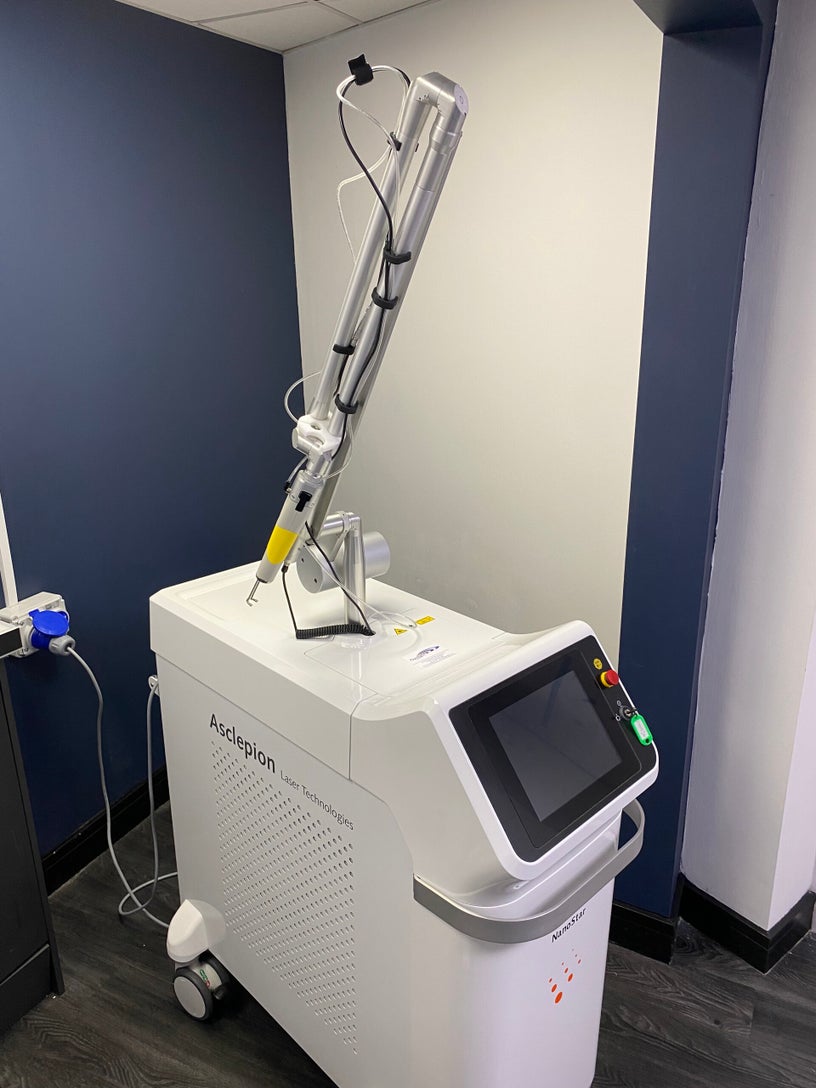
Pulsar assesses selected permanent makeup removal cases using the Asclepion NanoStar Y active Q-switched nanosecond laser at its Chorley clinic.
Start with an individual assessment
Send clear, makeup-free photographs in natural light or book a consultation so we can assess the exact visible tone, previous treatments, skin condition and whether a cautious patch test is appropriate.
Sources and further reading
This guide provides general information and does not replace an individual consultation, patch test or medical advice. Further reading: U.S. FDA — Tattoo Removal: Options and Results; U.S. FDA — Tattoos and Permanent Make-up; Laser Removal of Eyeliner and Eyebrow Tattoos: Experiences and Learnings; North Bristol NHS Trust — Tattoo Laser Treatment; Leeds Teaching Hospitals — Pigment Laser Treatment; American Academy of Dermatology — Laser Tattoo Removal.