

Laser Energy
A wavelength is selected according to the visible pigment, skin type and current skin condition.
Pulsar Laser Studio · Patient guide
A clear, honest guide to how laser tattoo removal works, how many sessions may be needed, which colours can respond, treatment risks, aftercare and what realistic progress looks like.
Jump to a section
The basics
Tattoo ink is placed within the deeper layers of the skin. Because the pigment particles are too large for the body to clear easily, the tattoo remains visible.
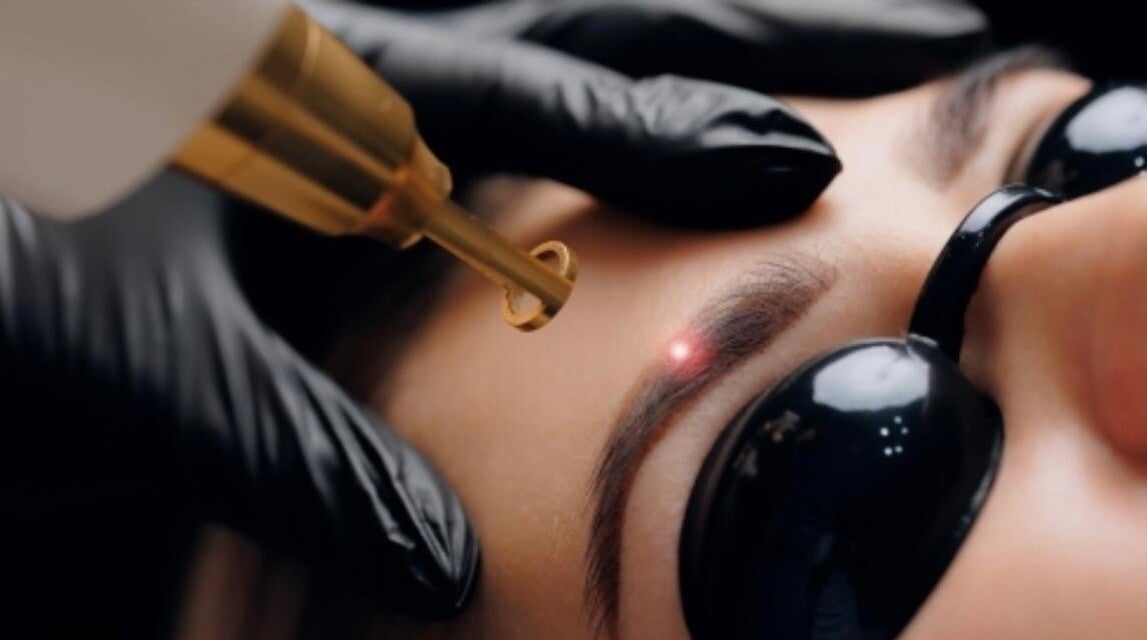
During laser tattoo removal, a suitable wavelength of light is delivered in very short pulses. The tattoo pigment absorbs this energy and larger pigment particles are fragmented into smaller pieces. The immune system gradually processes and removes part of that fragmented pigment over the weeks following treatment.
The laser does not simply “erase” the tattoo during the appointment. The visible fading happens gradually, which is why treatment requires time, healing and repeated sessions.

A wavelength is selected according to the visible pigment, skin type and current skin condition.
Suitable tattoo pigment absorbs the pulse and breaks into smaller fragments.
The body processes part of the fragmented pigment over time, allowing progressive fading.
Before treatment begins
A tattoo may look simple from the outside, but treatment planning depends on more than its size. The consultation helps identify factors that may affect suitability, risk, likely response and treatment intervals.
Important: A successful patch test does not guarantee complete removal or eliminate every risk. It provides useful information before a larger area is treated.
Treatment numbers
There is no honest way to promise an exact number before treatment begins. Some tattoos respond quickly, while others require a long course and may retain residual pigment.
Black and some dark pigments often respond more predictably than resistant light or mixed colours.
Deeply placed or densely packed ink usually requires more treatment than light, superficial work.
Cover-ups and repeatedly tattooed areas may contain several colours and layers at different depths.
Circulation and lymphatic drainage vary across the body and may influence the rate of visible fading.
Older tattoos may already have softened, while newer professional tattoos can contain dense modern pigment.
Settings and intervals must remain appropriate for the skin, even when faster fading is desired.
Earlier laser sessions, scarring or pigment changes can affect the next stage of treatment.
Fading for a cover-up may require fewer sessions than pursuing the maximum possible clearance.
Realistic expectation: Tattoo removal is usually a course rather than a one-off procedure. Complete removal is not guaranteed, and some tattoos leave a faint shadow, resistant colour or visible pre-existing texture.
Ink and wavelength
Many coloured tattoos can be treated, but different pigments respond to different wavelengths. A multi-coloured tattoo may therefore require more than one treatment approach.
Colour names alone do not tell the full story. Two tattoos that both appear “blue” may contain different pigment mixtures, depths and concentrations and may respond differently.
| Visible pigment | General response | Important considerations |
|---|---|---|
| Black and dark grey | Often the most responsive category | Dense professional black, cover-ups and scarred tattoos may still need a long course. |
| Very dark blue and green-black | May respond where the pigment absorbs an available wavelength | True green, turquoise and light blue are less predictable and may require a specialist device offering another appropriate wavelength. |
| Red, orange and selected pink | Can respond to a suitable wavelength | Shorter wavelengths interact more strongly with melanin. Some pink inks contain pale or white components that can darken, so assessment and patch testing are important. |
| Purple | Response can vary | Purple may be a mixture of red and blue components, which can fade unevenly. |
| Yellow, pale green, turquoise and light blue | Often more resistant | Some shades may not respond adequately to the available technology and may need another specialist pathway. |
| White, flesh-tone and some cosmetic pigments | Potentially unpredictable | Some pigments can darken after laser exposure, so patch testing is particularly important. |
A tattoo may contain several pigments blended together. As one component reduces, another can become more visible. This is especially relevant with cosmetic tattoos and mixed colours.
Technology explained honestly
Nanosecond and picosecond describe the duration of the laser pulse. A picosecond pulse is shorter, but pulse duration is only one part of a complete treatment system.
Wavelength, delivered energy, fluence, spot size, beam quality, pigment colour, skin type, treatment technique and healing interval all contribute to the result.
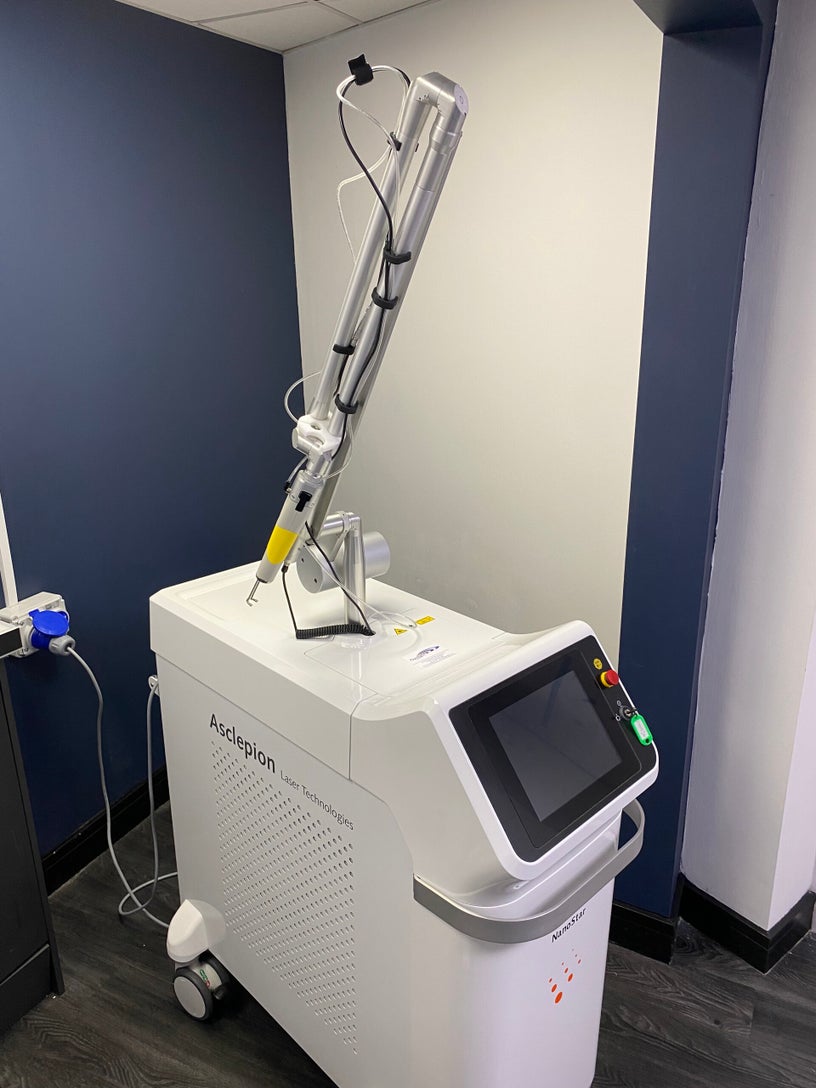
Pulsar uses the German-engineered Asclepion NanoStar Y active Q-switched nanosecond laser at its Chorley clinic. We do not market it as a picosecond laser. Our approach is to explain what the available wavelengths are suitable for and to refer or decline treatment when a pigment falls outside the appropriate pathway.
During treatment
Most clients describe the sensation as a fast snap, hot pinprick or elastic band against the skin. The treatment itself is usually quick, although larger tattoos take longer.
Melanin-aware treatment planning
People with darker skin tones may be suitable for laser tattoo removal, but tattoo pigment and natural melanin can compete for laser energy. Wavelength choice, conservative settings, patch testing and careful recovery planning are particularly important.
Fitzpatrick skin type, current colour, recent tanning, previous pigment change, scar history and the tattoo are considered together.
For suitable dark ink, 1064 nm is generally preferred because it interacts less strongly with epidermal melanin than shorter wavelengths. This does not remove all risk.
Shorter wavelengths used for selected red or orange pigments interact more strongly with melanin and may be unsuitable in some circumstances.
No wavelength is risk-free. Treatment may be adjusted, restricted to suitable pigments, postponed or declined where the risk of burns, hyperpigmentation, hypopigmentation or scarring is not acceptable.
Balanced information
Laser tattoo removal is not risk-free. Correct assessment, appropriate settings, adequate intervals and careful aftercare reduce risk, but they cannot remove it completely.
Pre-existing scarring: A tattoo can contain scar tissue from the original needle work before any laser treatment is performed. As pigment fades, this underlying texture may become more visible.
Seek prompt advice if you experience worsening pain, spreading redness, increasing heat, pus, fever, significant swelling, a severe rash or any reaction that concerns you.
Supporting recovery
Always follow the individual instructions given at your appointment. The guidance below is general and does not replace advice based on your own treatment response.
Sun exposure matters: Treatment on tanned or recently sun-exposed skin can increase the risk of burns and pigment change. Tell the clinic if the area has tanned before your appointment.
A different treatment goal
You may not need complete removal. Controlled fading can reduce dense black areas, heavy outlines or dominant features so a tattoo artist has more flexibility when planning new work.
The number of sessions depends on how much fading the tattoo artist needs, the colours involved and how the tattoo responds. It is useful to speak with your chosen tattoo artist before treatment so the target level of fading is clear.
Your treatment pathway
Provide clear photographs and measurements or book a consultation so we can understand the tattoo and your treatment goal.
We assess colour, density, depth, location, skin type, treatment history, medical information and whether the goal is full removal or fading.
A small test area is completed where required. We review the immediate response and allow sufficient time to assess healing.
Settings are selected according to the visible pigment, skin response and information gathered during consultation.
The skin is allowed to heal and the body is given time to process fragmented pigment. Sessions are not rushed simply because the surface looks settled.
Progress is reviewed before the next treatment. Settings, wavelengths, treatment area or intervals may be adjusted according to response.
Current tattoo removal pricing
Final sizing and suitability are confirmed after reviewing measurements, ink density, colours, placement and treatment complexity.
| Tattoo size | Single treatment | Course of 3 | Course of 6 |
|---|---|---|---|
| Extra Small Up to 1 × 1 cm | £75 | £199 | £369 |
| Small Up to 3 × 3 cm | £110 | £299 | £549 |
| Medium Up to 5 × 5 cm | £145 | £395 | £725 |
| Large Up to 10 × 10 cm | £250 | £675 | £1,249 |
| Extra Large Sleeves, chest, back and larger work | From £350 | From £945 | From £1,749 |
Bespoke pricing may apply to multiple tattoos, extra-large work, unusually dense ink, selective fading and complex cover-up projects. A written quotation should clearly state the area being treated and the agreed price. The £20 consultation deposit is deducted from your first treatment.
Related patient advice
What is assessed, what a patch test can show and why treatment may be postponed.
Read article →Melanin-aware wavelength selection, pigment-change risks and conservative planning.
Read article →The factors that influence treatment numbers and why exact guarantees are not possible.
Read article →Pre-existing tattoo texture, healing risks and how treatment planning affects safety.
Read article →Why pulse duration is only one part of laser tattoo removal technology.
Read article →How different pigments respond and why some shades are more resistant.
Read article →Why healing and pigment clearance continue after the surface appears settled.
Read article →Practical guidance for cooling, cleanliness, exercise, friction, heat and sunlight.
Read article →How controlled fading may create more flexibility for a future tattoo design.
Read article →Why eyebrow and permanent-makeup pigment may reveal red, orange or yellow tones.
Read article →Why white and pale pigments can be resistant or may darken after laser exposure.
Read article →Frequently asked questions
No. Some tattoos clear extremely well, while others leave residual pigment, shadowing, resistant colour or visible pre-existing scar tissue. We discuss the likely limitations during consultation.
Some immediate colour change may be visible, but meaningful fading develops gradually over the following weeks as the area heals and the body processes fragmented pigment.
Surface healing is only one part of the process. The skin and deeper tissue need adequate recovery time, and pigment clearance continues after the visible reaction has settled.
Complete removal in one session is not a realistic expectation for most tattoos. Tattoo ink is layered within the skin, and attempting to clear too much too quickly would increase the risk of injury.
Tanned or recently sun-exposed skin can increase the risk of burns and pigment change. Treatment may need to be postponed until the tan has fully settled.
Pulsar does not treat during pregnancy. Breastfeeding and other medical circumstances should be discussed during consultation so the safest pathway can be confirmed.
No. Frosting is a temporary immediate response caused by rapid changes within the treated skin. It usually settles quickly and does not show the final amount of fading.
Yes. Scar tissue from the original tattooing process can become more noticeable as the covering pigment fades.
Often yes, but the skin must be fully healed and the remaining pigment should have settled. Your laser practitioner and tattoo artist should both be involved in deciding when the area is ready.
Many people with darker skin tones may be suitable for selected tattoo-removal treatments, particularly suitable dark ink using an appropriate wavelength. Individual assessment, conservative planning and patch testing are important because burns and light or dark pigment changes remain recognised risks.
The Asclepion NanoStar Y active Q-switched nanosecond laser is located at the Chorley clinic.
Start with an assessment
Send clear photographs with measurements or book a consultation so we can assess the colours, density, location and whether your goal is full removal or fading for a cover-up.
Sources and further reading
This patient guide is general information and does not replace an individual consultation. Further reading: American Academy of Dermatology — Laser Tattoo Removal; U.S. FDA — Tattoo Removal Options and Results; North Bristol NHS Trust — Tattoo Laser Treatment.