

Colour Absorption
Different pigments absorb different wavelengths.
Pulsar Laser Studio · Coloured tattoo removal guide
Not all tattoo pigments respond to laser treatment in the same way. Black and dark grey are generally among the most responsive, while light blue, turquoise, pale green, yellow, white and some cosmetic pigments can be more difficult or unpredictable.
Jump to a section
The honest overview
This chart is general guidance rather than a guarantee. Tattoos that look the same colour can contain different pigment mixtures and may respond very differently.
| Visible colour | General response | Common pathway | Important considerations |
|---|---|---|---|
| Black and dark grey | Often the most responsive | Commonly 1064 nm | Dense professional black, cover-ups and scarred tattoos may still require a long course. |
| Dark blue | Often responsive | 1064 nm, 755 nm or 694 nm depending on the pigment and system | Very dark blue can behave similarly to black, while brighter blue may not. |
| Red and red-brown | Frequently responsive | Commonly 532 nm | Skin type and tanning require careful assessment. |
| Orange and pink | Variable to good | Often 532 nm | Pink may contain white pigment and behave unpredictably. |
| Green and purple | Variable | Often 755 nm alexandrite or 694 nm ruby | These colours may be resistant to a standard 1064/532 nm pathway. |
| Light blue and turquoise | Often difficult | May require specialist ruby, alexandrite or selected picosecond wavelengths | Some shades may not respond adequately to the technology available at Pulsar. |
| Yellow and pale green | Often resistant | No single universally reliable pathway | Complete clearance may not be possible. |
| White, flesh-tone and cosmetic pigments | Potentially unpredictable | Patch testing is essential | Some pigments can turn grey or black after laser exposure. |
No colour chart can predict an individual result. Ink chemistry, depth, density, layering, tattoo age, skin type, treatment history and scar tissue all affect the response.
Laser light must be absorbed by pigment
Laser tattoo removal relies on selective absorption. A suitable pigment must absorb enough of the chosen wavelength for the very short pulse to fragment part of the ink.
The colour you see is light reflected back towards your eyes. A pigment may absorb some wavelengths strongly and reflect others. This is why one wavelength cannot reliably treat every colour.
A multicoloured tattoo may therefore need more than one wavelength, several treatment stages or referral to a clinic with a specialist laser pathway.

Different pigments absorb different wavelengths.
A visible colour may contain several blended pigments.
The wavelength must also be suitable for the surrounding skin.
A clinic can only treat colours within the safe capability of its system.
Technology explained honestly
Commonly used for suitable black, dark grey and some very dark blue pigment.
Commonly used for suitable red, orange, pink and red-brown pigment.
May be useful for selected green, blue, purple and violet pigments.
Often used for selected blue, green and teal pigments.
Wavelength is only one factor. Pulse duration, fluence, spot size, beam quality, skin type, technique and healing intervals also affect safety and response.
Colour-by-colour guidance
Generally among the most responsive colours. Dense professional ink, heavy outlines and cover-ups may still need many sessions.
Many warm pigments can respond to 532 nm. Exact chemistry, skin type and tanning still matter.
Very dark navy may behave similarly to black, while brighter or lighter blue can be more resistant.
Some green pigments respond better to alexandrite or ruby wavelengths than to standard Nd:YAG wavelengths.
Purple may contain red and blue components and can therefore fade unevenly.
Often challenging and may require specialist ruby, alexandrite or selected picosecond technology.
Often resistant because it may absorb commonly available tattoo-removal wavelengths poorly.
Potentially unpredictable and may darken after laser exposure.
Pastel pink, blue, green and lavender may contain white pigment, making the response less predictable.
Permanent makeup needs separate assessment
Permanent makeup is often blended to create brown, taupe, blonde, flesh-tone, pink or red shades. These mixtures can contain iron oxides, titanium dioxide and several colour components.
A dark eyebrow tattoo may initially respond to 1064 nm treatment, revealing red, orange, yellow or pink pigment underneath. This may be an underlying component becoming visible rather than a completely new colour being created.
Some cosmetic pigments can darken after laser exposure, so consultation and patch testing are particularly important.
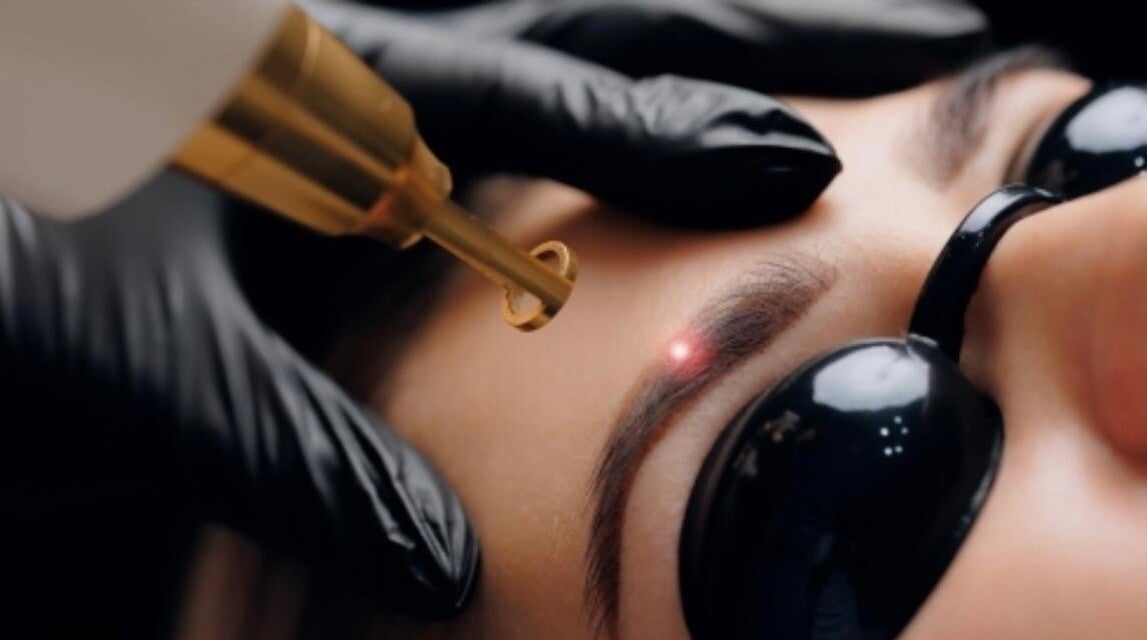
Patch testing reduces uncertainty but does not guarantee the whole tattoo will respond identically. Different sections can contain different pigments and depths.
Colour is only one part of the answer
Different manufacturers can create similar-looking colours from different compounds.
Pigment placed at different depths can clear unevenly.
Dense professional ink usually requires more treatment than light shading.
Cover-ups can contain several colours and deposits at different depths.
Older tattoos may already have softened, while newer tattoos can contain dense modern pigment.
Circulation and lymphatic activity can influence visible fading.
Safe settings must protect the surrounding skin as well as target the ink.
Earlier laser sessions, pigment changes and scar tissue affect the next decision.
What Pulsar can treat
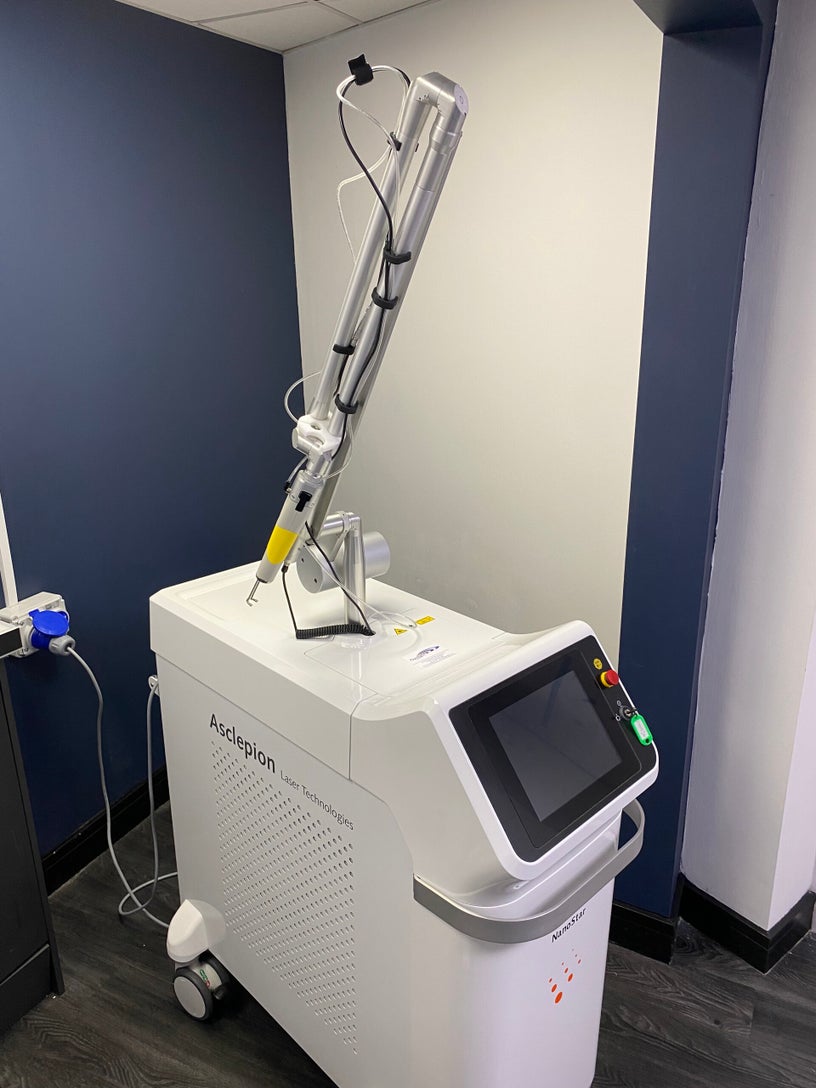
Pulsar uses the German-engineered Asclepion NanoStar Y active Q-switched nanosecond laser at its Chorley clinic. We do not market it as a picosecond laser.
Where a pigment is unlikely to respond meaningfully to 1064 nm or 532 nm, we may recommend a ruby, alexandrite or specialist picosecond provider instead.
Frequently asked questions
No. Resistant colour, residual shadowing, scar texture or pigment change may remain.
Black and dark grey are generally among the most responsive, although density, depth and layering still matter.
Some light blue and turquoise pigments are difficult to treat with a standard 1064/532 nm system and may require another wavelength.
Some green pigments respond to ruby or alexandrite wavelengths, but green can be resistant to standard Nd:YAG treatment.
Many red, orange and red-brown pigments can respond to 532 nm treatment after assessment.
Yellow often absorbs commonly available tattoo-removal wavelengths poorly and may only partially fade.
White ink is unpredictable and can darken after laser exposure. Patch testing is essential.
The darker component may have reduced, revealing warmer pigment that was already present underneath.
No. Picosecond describes pulse duration, not universal colour capability. Wavelength and pigment chemistry remain important.
Not safely or reliably. More energy cannot replace the correct wavelength and can increase injury risk.
Yes. Different colours can require different wavelengths, a staged approach or referral.
Yes. Full removal may not be necessary if the darkest or most limiting areas can be reduced sufficiently.
Continue reading
How treatment works, sessions, risks, aftercare and cover-up fading.
Read guide →Why colour, density, depth, layering and your goal affect the likely course.
Read article →Why pulse duration is only one part of a tattoo-removal system.
Read article →How cosmetic pigment can reveal red, orange, pink or yellow tones.
Read article →How to protect the treated skin and reduce avoidable complications.
Read article →How controlled fading can create more flexibility for a new design.
Read article →Start with an honest colour assessment
Send clear photographs in natural light with measurements, or book a consultation. We will explain which visible pigments may suit our 1064 nm and 532 nm pathway and where another specialist wavelength may be more appropriate.
Sources and further reading
This guide provides general information and does not replace an individual consultation, patch test or medical assessment. Further reading: American Academy of Dermatology; U.S. FDA; North Bristol NHS Trust; Laser Tattoo Removal: A Clinical Update; Optimising Laser Tattoo Removal.