
Yellow, White or Brown Areas
The nail can become dull, opaque or unevenly discoloured. Colour alone cannot confirm fungus.

Fungal nail laser treatment · Chorley & Horwich
Consultation-led laser treatment for suitable thickened, discoloured, brittle or damaged-looking toenails and fingernails at Pulsar Laser Studio.
Fungal nail infection can be persistent, but not every abnormal-looking nail is caused by fungus. We begin with an assessment, discuss whether confirmation by a GP, pharmacist, podiatrist or laboratory test may be appropriate, and explain realistic treatment expectations before you proceed.
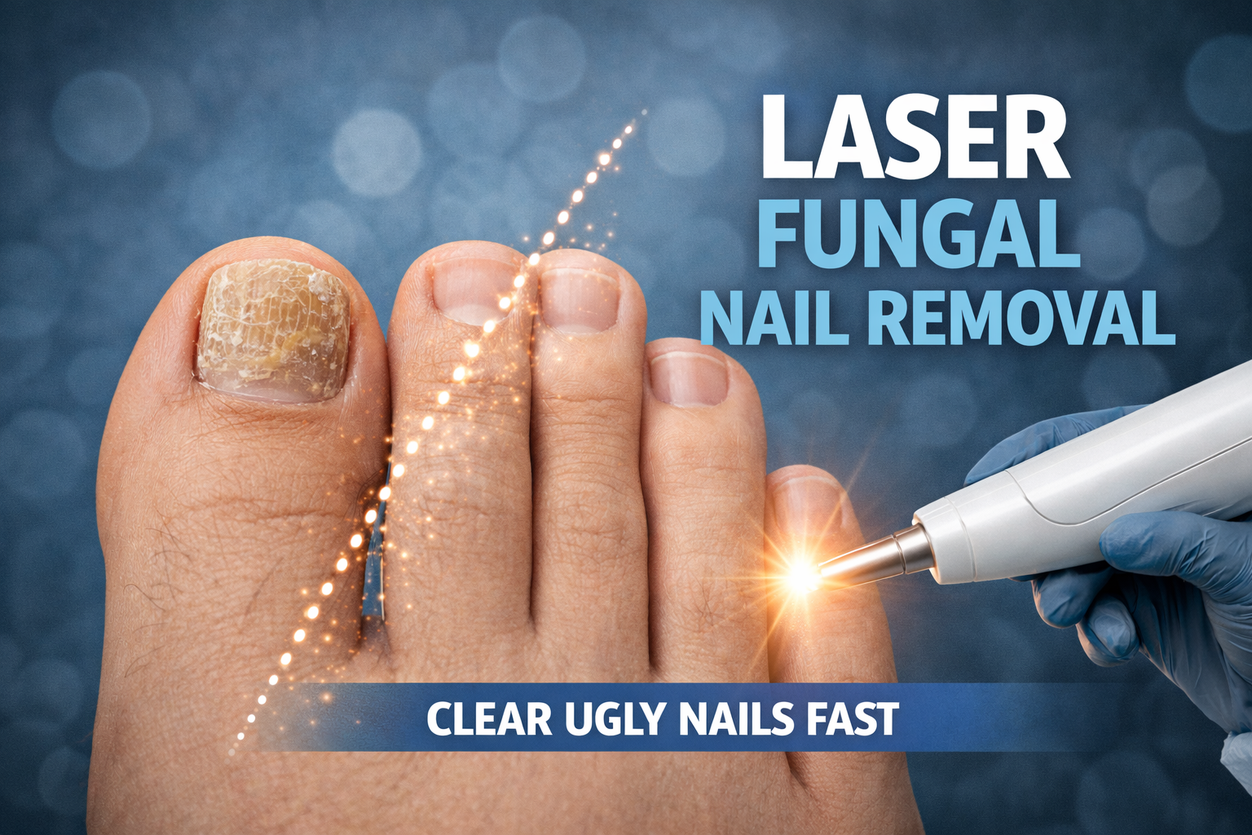
Start with the right assessment
Fungal nail infection is also called onychomycosis. It can cause thickening, discolouration, brittleness, crumbling or lifting of the nail, but these signs are not specific to fungus.
Nail trauma, psoriasis, eczema, bacterial changes, age-related thickening and other medical conditions can look similar. Where the cause is unclear, we may recommend that you seek confirmation before spending money on a course of laser treatment.
We look at the nail pattern.
We assess colour, thickness, lifting, crumbling, number of nails affected and the surrounding skin.
We review your history.
We ask about duration, previous treatments, athlete’s foot, nail trauma, medication and relevant health conditions.
We explain the next step.
Laser may be suitable, or we may advise testing, pharmacy treatment, podiatry or medical review first.
Signs worth assessing
A fungal infection may affect one nail or several. Toenails are more commonly affected than fingernails.
The nail can become dull, opaque or unevenly discoloured. Colour alone cannot confirm fungus.
Infected nail material can become difficult to trim and may break at the edge.
The nail may partly separate, allowing debris to build beneath it.
Long-standing infection or damage may change the shape and surface of the nail.
Flaking, itching or cracking between the toes can occur alongside fungal nail infection and may need separate treatment.
A thick nail can become tender or uncomfortable, although pain should be assessed carefully.
Consultation-led laser pathway
Laser energy is delivered across the nail and surrounding margin using a controlled treatment pattern. The aim is to produce a thermal effect while protecting the surrounding tissue.
Laser treatment should not be described as an instant cure. Evidence and outcomes vary, and healthier-looking nail can only be assessed as new nail grows forward. We therefore combine careful treatment delivery with hygiene, nail care and realistic follow-up.
We review the nails, symptoms, health history, previous treatments and whether confirmation of fungus is advisable.
Nails should be clean, free from polish and trimmed. Thick nails may benefit from professional thinning or podiatry.
The laser is applied methodically over the affected nail and appropriate surrounding area. Warmth is expected.
You continue hygiene and any advised antifungal pathway while the nail grows. Progress is reviewed before further treatment.
Most clients feel a gradual warming or short bursts of heat. Sensation depends on nail thickness, the number of nails and individual sensitivity. You should tell your practitioner immediately if the heat becomes uncomfortable so treatment can be paused or adjusted.
A gradual improvement pathway
The damaged section of nail will not become clear immediately. Any improvement is seen as new nail grows from the base and the affected nail moves forward.
Treatment planning
There is no responsible one-size-fits-all number. Your recommended course is based on the number and thickness of affected nails, severity, growth rate, previous treatment and response.
A smaller number of treatment visits may be discussed, with progress reviewed as nail growth becomes visible.
A structured course and additional nail-care support may be more appropriate.
Testing, medical treatment, podiatry or a combined approach may be recommended rather than laser alone.
Support the new nail as it grows
A joined-up approach
The most suitable route depends on whether fungus is confirmed, how much of the nail is involved and your general health.
Nail lacquers or solutions may be suitable for some milder infections. They usually require consistent use over a prolonged period.
Prescription tablets may be considered by a medical professional after assessment. They are not suitable for everyone and may require monitoring.
Laser may be considered as a private supportive option. Nail thinning, hygiene and antifungal care may also be advised.
Why choose Pulsar
We assess whether the presentation is consistent with fungal nail infection and whether laser is a sensible option.
We explain that results are gradual, vary between clients and depend on healthy nail growth and aftercare.
We recommend pharmacy, GP, dermatology or podiatry input when your symptoms need another level of assessment.
Appointments are available in Chorley and Horwich, subject to current clinic availability.
Your plan should clearly state the nails included, fees, expected schedule and aftercare responsibilities.
We assess new nail growth and response rather than repeatedly treating without reviewing progress.
Choose your location
Use the booking button below for the current fungal nail service. Our team can confirm the correct clinic and appointment type.
2 Pilkington Court
George Street
Chorley PR7 2BE
Convenient for Chorley, Leyland, Preston, Euxton, Adlington and wider Lancashire.
23 Winter Hey Lane
Horwich
Bolton BL6 7AD
Convenient for Horwich, Bolton, Westhoughton, Blackrod, Lostock, Wigan and Greater Manchester.
Before you book
Thickening, discolouration, crumbling and lifting can occur with fungal infection, but also with trauma, psoriasis and other conditions. We can assess whether laser appears appropriate, but testing or medical assessment may be recommended where the diagnosis is uncertain.
Laser should not be presented as a guaranteed cure. Outcomes vary, evidence is mixed and reinfection is possible. The aim is to support improvement in suitable nails as healthy nail grows forward.
The number of sessions depends on the number of nails involved, severity, thickness, growth rate, previous treatment, health factors and response. We will recommend a personalised plan after consultation.
Most clients feel warmth or brief heat. Sensation varies and treatment should not be pushed through significant pain. Tell your practitioner immediately if it becomes uncomfortable.
No. Existing damaged nail does not become clear instantly. Improvement can only be seen as new nail grows from the base, which may take many months for toenails.
Routine activity can usually continue immediately, although individual advice may change if the nail or surrounding skin is already sore, damaged or medically complicated.
Nail polish, gel and artificial nail products must be removed before assessment and laser treatment. Your practitioner will explain when cosmetic products can be reapplied, although keeping the nail visible may help progress monitoring.
The treatment area is decided during assessment. Depending on the pattern of suspected infection, treating only the most visibly affected nail may not always be appropriate.
A combined plan may be appropriate. Pharmacy or prescription treatment should be used only as directed by the relevant healthcare professional.
Suitability depends on diagnosis, nail and skin condition, medical history, circulation, sensation, medication and healing risk. Clients with diabetes, poor circulation, neuropathy, immune suppression, open wounds or signs of bacterial infection may require medical or podiatry clearance.
Yes. Fungal nail treatment is now available through Pulsar in Chorley and Horwich, subject to appointment availability. The booking team can confirm the correct location.
Start with an honest assessment
Book the fungal nail service online or send us a clear photograph by WhatsApp. We will guide you towards laser treatment, confirmation testing or another suitable pathway.
This page provides general information and does not replace diagnosis or medical advice. Results vary and are not guaranteed.